Thursday, February 27, 2014
Book Review : Formed for the Glory of God : Kyle Strobel
The author of the letter to the Hebrews wrote, "Remember your leaders, those who spoke to you the word of God. Consider the outcome of their way of life, and imitate their faith." (Heb. 13:7) While this directive has very much to do with the great privilege of learning from and imitating those whose leadership of the church is "local" and "direct," it also implies that considering the outcome of another believer, eminent in godliness, holds incredible value for the Christian. If the believer has been taken from a state of utter corruption and brought into sanctifying fellowship with Christ, then beholding God's artistry in a man's holiness is nothing short of a sight to a miracle of grace.
In the history of the church in America, few names are as significant as Jonathan Edwards. His ministry profoundly marked the American theological landscape as one who held fast to the sweet doctrines of grace and was a first-hand witness to the Great Awakening. The language Edwards employed in his sermons reflected a vision of Christ as glorious, supreme, beautiful, and eternally worthy of all delight and worship. Edwards was, however, not simply a producer of excellent sermons and weighty theology. He was a real man, a follower of Christ, whose pursuit of Jesus stood behind all his ministerial contributions. He knew what it was to walk with God and enjoy Him.
In Formed for the Glory of God: Learning from the Spiritual Practices of Jonathan Edwards, Kyle Strobel writes of Edwards as a man whose walk with God is as imitable as his preaching and teaching are to be enjoyed. Surely, Edwards is significant as one who spoke the Word of God. By that account, his way of life is worth being considered, which Strobel strives to lay out in this book.
Approaching the book, I was expecting to be more pointedly "discipled" by Edwards' teaching. What I found is a very helpful and balanced look at the vision of godliness that propelled Edwards and an exploration of the practices that Edwards employed in pursuit of that vision. This is not a biography proper - you won't find Strobel relating all of Edwards' life experiences and the impact of those experiences on his walk with God. Rather, Strobel puts together a kind of "systematic devotional theology" of Edwards' life. In this book, you won't necessarily find anything new or edgy. You won't find promises that following Edwards' "strategies" will somehow net you the same place in church history. Frankly, the book hearkens to a time that, while simpler in cultural trappings and distractions, holds forth a depth and complexity in the church's understanding and enjoyment of the Christian's relationship with God that surveying Edwards' practices will drive you to thinking "Where do I start?".
The first section of the book provides an effective overview of a significant aspect of the spiritual disciplines that may often be overlooked: the enjoyment of God as enjoyable in Himself. Part One is relatively small compared to the rest of the book, but it is this section that sets apart this book as distinctly "Edwardsian" and provides a perspective on the practical pursuit of communion with God that is well to be recognized. In short, Strobel suggests that Edwards' pursuit of God was "A Journey Into Beauty." Unfortunately, this side of Edwards is often overlooked for the cultural obscuration attached to his name. While it may not be a practically-oriented section, it does give a view of Christian living that reflects Edwards' genuine concern to enjoy God as He is. Strobel ends the chapter with this helpful statement: "...the Christian life is a subtle cleaning of the glass to see him [God] for who he is, and therefore seeing yourself, life and the world for what they are."
The second part of the book is concerned with the practical pursuits of Edwards' walk with God. This section is most certainly fodder for the believer who would earnest pursue God. What is helpful to note is that Strobel presents these pursuits of Edwards accessibly. There is not the sense of "Edwards was great at this - you are not - good luck trying to be like him." Approaching this section with a desire to grow, young and mature Christian alike should be challenged to a deeper and more enjoyable walk with Jesus. And, because these practices are God-centered, any hint of "mystical" experience can be moored to the theological vision that Edwards is so well and rightly known for.
Altogether, this is a fine book that explores the vision and practical pursuit of God enjoyed by a man worthy, by God's grace, to be imitated for his godliness. Again, this is not a "theology of Edwards," but a review of Edwards' vision for pursuing God and an introduction to certain practices he employed in pursuit of that vision. It's a good and warm read and one certainly worthy of picking up as a matter of knowing the great and glorious Triune God more deeply. Thank you to the folks at InterVarsity Press for supplying a complimentary review copy without expectations of a positive review.
Wednesday, January 9, 2013
Putting the Hip in Church Planting Fellowships : Identity
Today's installment of "Putting the Hip in Church Planting Fellowships" kicks off our look at the unintended consequences of subcultural targeting and how embracing a more well-rounded philosophy of church planting can head those side-effects off at the pass. Here's the first tick on the list:
- A divergence from the biblical pattern of gospel-centered identity inevitably promoting a culture-centered identity among those gathered in the church plant
At the end of the day, this first issue we're tackling is one of the primary fenceposts that mark off the problems associated with the trend in church planting in view here. This issue is really more of a big picture kind of problem and is not one that a) the vast majority of church planters are eager to see happen, even if they champion the subculture-as-necessary-target method and b) can be treated beyond abstract reflections here. It's way too big of a potential flaw in the garment to patch up with the little thread available here, so our task is going to be identifying what the problem is abstractly and providing helpful perspective on how to rightly and biblically think "abstractly" about the nature of the local church. Not much here by way of practical tips or specific targets - just a potentially major problem that would otherwise skew the perception of the local church's identity among a whole lot of people. And that makes it an issue worth addressing first.
Any self-identified "evangelical" assents to the need to proclaim the gospel, regardless of nuances or definitions. Finding basic tenets of gospel truth are just as easily accessed on a prosperity gospel teacher's website as an Orthodox Presbyterian website. Which makes the identity issue surrounding the gospel so crucial for those involved with the establishment of new local churches. How is it that such divergent groups (theologically and by way of philosophy of ministry) can affirm the same "core" truths, yet have such radically different agendas for carrying out ministry? I suggest it is because, apart from adjacent areas of doctrine, the assumption of the gospel has given way to the prioritization of things outside the realm of focus for a New Testament church.
Since the 19th century, the atmosphere of American evangelicalism has generally pushed back against the press for doctrinal purity and towards models of what has been considered more "practical" matters facing people. The suspicion that the very end of days was upon us provoked a rise in end-times groups, swallowing up people whose hopes were, at best, diverted from the gospel to the supposed prophecies and biblical interpretations that were only empty and false promises. The recasting of evangelistic sermons and presentations of the gospel into the mold of anxious-bench emotional manipulations drove many well-meaning Christians to reliance on presentations of the gospel instead of the power of God at work through the gospel itself. The emotionalism of the early 1900's drew the focus of many on what was billed as the work of the Holy Spirit, instead of seeing the clear gospel fruits of holiness, godliness, faithfulness, and the like prized among the miracles worked by the Holy Spirit among the people of God. Theological liberalism has consistently maintained the idea that meeting felt needs was really the missionary task. And finally, the last 30 years has seen the ascendance of a method of ministry, particularly church planting, that has focused so heavily on identifying emerging cultures, classes, and sectors of society that assembling groups of similar people has become a staple food in the diet of homefront missiology.
While the recent church planting focus is not as radically off-base as the others listed above, it might be appropriate to consider it an opening act in pressuring local churches away from identifying closely with the gospel. Consider one of the primary purposes of Acts, signifying an interpretive lens for the book as a whole: "So when they had come together, they asked him [the resurrected Jesus], 'Lord, will you at this time restore the kingdom to Israel?' He said to them, 'It is not for you to know times or seasons that the Father has fixed by his own authority. But you will receive power when the Holy Spirit has come upon you, and you will be my witnesses in Jerusalem and in all Judea and Samaria, and to the end of the earth.'" These were the parting words of the Lord Christ before His ascension - and words that instruct the missionary endeavor of the church.
The words of Acts 1:8 are often associated with missionary enterprises. But the context (immediate and the big picture of Acts) supplies us with an even more helpful perspective than what might otherwise be taken from the verse itself. Notice that the apostles ask this question: "Lord, will you at this time restore the kingdom to Israel?" This cannot go unnoticed for the reader of Acts, because it shows an issue that surfaces multiple times in the book: the idea that the Kingdom of God would come only to Israelites. Instead, the expansion of the Kingdom to include people from every tribe, language, people, and nation is in view throughout the book. So while it was a temptation for the apostles to restrict their ministry to the Jews, the missionary commission drives Peter to not only preach to the Jews gathered (from all manner of nations) at Pentecost, but to enter Cornelius' home and proclaim the gospel to him and his household. It was through that encounter that Peter's eyes were opened to the truth that the gospel shapes the identity for all who believe.
Even though the contemporary emphasis on targeted church planting may not stress the need to follow certain aspects of the ceremonial law for inclusion, the tendency in the human heart toward self-righteousness and partisanship is not altogether removed. Thus, the warnings in the New Testament for the people of God to avoid such behavior in the church. And that brings us full circle to what stands as a primary concern regarding the culturally-driven identity shaping many church planting efforts: they run a significant risk of strengthening the cultural aversions (doctors, lawyers, and businessmen don't typically spend time with migrant workers) that the gospel eradicates as it becomes the new identity of the people of God. This is the potentially great hazard that a culture-centered identity poses for the relationships within the church, a hazard that a gospel-centered emphasis in evangelizing a whole community would do well to avoid. And it almost goes without saying that it runs the risk of compromising the church's identity as a church targeting "X type of people," rather than the identity the church holds as the people of God, where the gospel replaces other identities.
At the end of the day, the risk to gospel-centered identity has the potential to compromise to significant aspects of the local church: its ministerial focus and its identity as the gospel-transformed people of God. Both of these are priorities that ought to be guarded and pursued by any local church. In the next few days, we'll be moving on to another "unintended consequence." All of these are related in some way, though they all are tangential to this: the local church needs to be shaped by, driven by, and held together by the gospel. It is its message and its identity is found in the glorious Christ whose gospel it is. We cannot afford to assume it.
Thursday, December 13, 2012
Book Review : Transformed by God : New Covenant Life and Ministry : David Peterson
Few theological themes exist more prominently throughout the Scriptures than that of covenants. While this review isn't the place for discussing the importance of covenants, it is the place to give a brief word on it, as Dr. Peterson's book, Transformed by God : New Covenant Life and Ministry, assumes a foundational understanding of just how important the presence of covenants throughout the Old Testament, particularly, find their way to fulfillment in the New Covenant sealed by Christ. So, to introduce this review and the theme generally, here we go:Covenants play a significant role throughout the Old Testament. The formal covenant exists at peaks throughout redemptive history, as God addresses His promises to major biblical figures: Abraham, Moses, and David. The general role of divine promises is asserted soon after the Fall, when God promised in the "proto-evangelion" that One would come who would stamp out the serpent. Since that anticipation in Genesis, there are more or less formal events that concern the promises of God to His people. The prophets Jeremiah and Ezekiel, however, are mouthpieces whereby a "New Covenant" would come about, a Covenant that would be fulfilled by God Himself. All of the other covenants and promises would ultimately find their converge point and fulfillment in the New Covenant. Which makes the New Covenant a very important aspect of redemptive history.
Dr. Peterson's volume has to do with the proclamation of that New Covenant during the ministry of the prophet Jeremiah, in particular, and how the Covenant, "signed, sealed, and delivered," effects the people of God, our worship and ministry, the hearts of God's people, and our knowledge of God. This important reality indeed changes "everything" and Dr. Peterson's aim in writing this volume is admirable and more than appropriate. It is a commendable pursuit and an entry into what I would consider an "under-served" field of theology, particularly as it specifically concerns the New Covenant.
The first four chapters of Transformed by God are adaptations of lectures delivered by Dr. Peterson, while the remaining two chapters are additions made to the work. To be fair, I have a good deal of respect for Dr. Peterson as a scholar. I own a couple other books by him, including his contribution to the Pillar Commentary series regarding Acts. There is no doubt that he is a fine scholar and theologian, I must say, however, that my experience with this book was not as engaging as I had hoped it would be. The book's content is solid, which alone merits a positive review on the grounds that it both addresses a very important theme and does so soundly. However, I found the book to be somewhat dry. This may have something to do with the adaptation of previous material or the extended time period I took to complete the book. Nonetheless, on such a major and largely unaddressed (in book form, at least) topic, I expected a bit more in the department of "engagement."
I would certainly recommend Dr. Peterson's book to anyone looking to gain some perspective on the New Covenant and its implications for Christian life and ministry - that's the thrust of the book and, as I said, it does not fail in that regard. That being said, I would ensure that if you do read this book, that you stay intentionally engaged. Thank you to the folks at InterVarsity Press for supplying a complimentary review copy without expectations of a positive review.
Wednesday, December 12, 2012
Putting the Hip in Church Planting Fellowships : The Law of Unintended Consequences
The other day, my wife (who happens to be one of the most hospitable and generous people I know) made a meal for some good friends of ours who had just welcomed their third child into the world. Now, my wife does an excellent job on two fronts with these meals: 1) She stays on top of caring for others with them; and, 2) She does a very good job of figuring out what kind of meal should be made and then does a great job making it. So, last week, to accompany some well-made soup, she found a recipe for bread that we hadn't tried before, a recipe that had received some good reviews from others. The soup turned out well. The "bread" did not. Accordingly, it did not accompany the soup to this family, whom we care about and did not want to be responsible for breaking any of their teeth. As an aside, if anyone works for a brick manufacturer and would like to find a way to only heat their bricks in a 300+ degree oven (as opposed to the kilns presently used), we have a bread recipe that would substitute your brick recipe well.
Last week, I began a series entitled "Putting the Hip in Church Planting Fellowships," providing some perspective on what I see as some missteps in contemporary philosophies of church planting. Let me emphasize again that I love church planting as a ministry, which is one reason I hope these posts will resonate with folks. Because I want to see church planting increase and be done the right way. But not only one or the other. They both have to be there. And that leads us into today's post.
Like the recipe my wife used to make the brick-bread, a philosophy of ministry that fails to incorporate the necessary components will inevitably fail. For whatever reason, the results might be endorsed by a whole host of people. And it might even seem to start out well, like a good recipe would have it. But neither endorsements nor good beginnings avail for a good loaf of bread or, much more importantly, a healthy local church. So my concern here in these posts is to address a missing step in the recipe for planting local churches that, in my opinion, is creating a local church culture in the United States that is out of character for that most precious ministry. It is the "law of unintended consequences" - well-intended tweaks to the nature of a ministry that ends up rerouting things down the road in ways not intended, yet damaging to churches, families, individuals, and the culture at large.
This post is intended to give you a preview of some of those concerns, which I'll pick up and discuss over the days ahead. Each concern has its place and will have a separate post devoted to it. The list below summarizes the inevitable "unintended consequences" that, in my opinion, the present emphasis in the church planting culture on targeting segments of culture rather than geographic regions are creating, both short-term and long-term:
Last week, I began a series entitled "Putting the Hip in Church Planting Fellowships," providing some perspective on what I see as some missteps in contemporary philosophies of church planting. Let me emphasize again that I love church planting as a ministry, which is one reason I hope these posts will resonate with folks. Because I want to see church planting increase and be done the right way. But not only one or the other. They both have to be there. And that leads us into today's post.
Like the recipe my wife used to make the brick-bread, a philosophy of ministry that fails to incorporate the necessary components will inevitably fail. For whatever reason, the results might be endorsed by a whole host of people. And it might even seem to start out well, like a good recipe would have it. But neither endorsements nor good beginnings avail for a good loaf of bread or, much more importantly, a healthy local church. So my concern here in these posts is to address a missing step in the recipe for planting local churches that, in my opinion, is creating a local church culture in the United States that is out of character for that most precious ministry. It is the "law of unintended consequences" - well-intended tweaks to the nature of a ministry that ends up rerouting things down the road in ways not intended, yet damaging to churches, families, individuals, and the culture at large.
This post is intended to give you a preview of some of those concerns, which I'll pick up and discuss over the days ahead. Each concern has its place and will have a separate post devoted to it. The list below summarizes the inevitable "unintended consequences" that, in my opinion, the present emphasis in the church planting culture on targeting segments of culture rather than geographic regions are creating, both short-term and long-term:
- A divergence from the biblical pattern of gospel-centered identity inevitably promoting a culture-centered identity among those gathered in the church plant;
- Focus on a segment of culture inevitably gathers a homogeneous group. Accordingly, this group fails to represent the cross-cultural character of the New Testament church that testifies to the supremacy of the gospel. Along with this, the group will find it difficult to pursue the missionary enterprise of the church in pursuit of others, both "naturally" and due to the reinforced philosophy that focuses on people "like them";
- The oft-selected subcultures tend to be widely shared in church planting fellowships. Twenty years ago, it was "unchurched Harry and Mary." Now it appears to be hipster Harry and Harriet or tattooed Tom and Tracy. But this emphasis on targeting subcultures ends up marginalizing such a tremendous percentage of the population that instead of evangelizing a community, it evangelizes a part of the community. And the rest of the community continues to go unreached, though the statistic of a "church plant" goes up, gets us excited, and leaves thousands of people without a witness while zeroing in on a few hundred.
- When emerging or popular subcultures are targeted, an inevitable premium of the church plant ends up being "newness" or "relevance." While this dynamic may "help" some folks who spend Sunday mornings in a bar, it can be a major stumbling block for the large percentage of folks who spend Sunday mornings at churches that proclaim a false gospel. When these people encounter someone from Hipster Church of Cooltown, they stumble over the apparent lack of transcendence accompanying worship and would prefer to stay with something familiar that at least "seems" like a real church. While there's nothing necessarily wrong with being from Hipster Church, why is it okay to justify the "relevance" as the removal of a stumbling block, when a large percentage of Americans are more prone to stumble over the fact that a church plant doesn't even seem like church to them?;
- When we target subcultures, we inevitable shift the focus off of the transforming power of the gospel and the saving power of the Triune God to a subtle trust that our methods are trustworthy enough to hang the church's hat of identity on. "We're not like other churches" shouldn't be the banner flying over a church unless it's because every other church in the community fails to proclaim the glorious gospel of God's grace to sinners through Christ;
- Instead of reconciling natural differences by the gospel and providing occasion for actual application of that amazingly peculiar effect of the gospel within the body of Christ, it can further harden long-held differences that are based on culture, rather than believer/unbeliever. In a culture that continues to demonstrate racism and class warfare as not only de facto, but even pursued for the sake of political gain, there is tremendous opportunity for church plants that embrace a model of ministry holding forth the gospel as a reconciler of man to God, first, and then men to men as a byproduct of great witnessing value;
- Prioritization means time and resources that are diverted from elsewhere. Which means that even the best-intentioned efforts to plant culturally-targeted local churches end up focusing more on sharpening cultural relevance than they should, while diverting resources away from the biblically emphasized ingredients for a healthy local church;
- And, finally, what happens when the targeted culture becomes over-saturated? Not only do we end up neglecting a large segment of the population, but we end up burning over a segment that will, over time, inevitably "die out." Focusing on the hipster crowd today will only last as long as there is a hipster crowd to focus on. The crowd either changes, dies off socially, or dies with the people who comprise it. The church then becomes irrelevant, unless it grows with the group it targeted, which, in my mind, inevitably means that they move closer to what should have been done in the first place: focus on the under-evangelized community as a whole instead of a small fragment of it.
Saturday, December 8, 2012
Book Review : The Acts of the Risen Lord Jesus (NSBT) : Alan Thompson
Two things to kick off this book review that I want to grab your attention right away :
Over the past decade plus, InterVarsity Press has been releasing some excellent volumes in a series entitled "New Studies in Biblical Theology." With contributions from scholars such as David Peterson, Greg Beale, and Andreas Kostenberger, the NSBT series, which is edited by D.A. Carson, is a treasure chest of biblical theological insights that are academically rigorous and evangelically faithful. There is a lot of very helpful material to be found in these books (at least in the few I've looked at).
How does Alan Thompson's entry, The Acts of the Risen Lord Jesus, which concerns a biblical theological framework for approaching the book of Acts, stack up to that reputation? With all of the out-of-the-strike-zone stuff out there regarding a theology of Acts, what kind of material does Thompson supply to the discussion? And with all of the differing interpretations of Acts, what really qualifies as a convincingly biblical theology of Acts? In light of all that background, I'm very happy to say that I found this book to be incredibly helpful. Frankly, I haven't read a more paradigm solidifying synthesis of theological analysis pertaining to a scriptural book/author in recent memory. It really is that well written and thoroughly biblical
After introducing the book, Dr. Thompson supplies an initial framework for approaching New Testament theology, generally referred to as the "already/not-yet" description of the Kingdom of God. (If you're not familiar with that hermeneutic, check out Graeme Goldsworthy or George Eldon Ladd, who supplied some contemporary pioneer material on the Kingdom come/yet-to-come theology.) From that starting point, he treats the place of Jesus' death and resurrection in Luke's theology, with particular emphasis on how the resurrection is emphasized in Luke and Acts. Continuing, Dr. Thompson addresses what I think is one of the most critical areas of interpretation that fails to be understood in many deficient approaches to Acts: the missionary character of the book, particularly the expansion of God's Kingdom beyond ethnic Israel to include Gentiles throughout the earth. Chapter Four concerns the role of the Holy Spirit, which treatment by Dr. Thompson is excellent in its correction of the unhealthy doctrine of the Spirit held in many circles of popular evangelicalism today. Chapters Six and Seven address the role of two very significant factors in Old Covenant Judaism and the place that it takes in the life of the New Covenant community, as communicated by Luke. The final Chapter is a conclusion of the material.
All things considered, while the book may be a bit more "technical" than some folks are used to, I would recommend that any Christian with an interest in understanding a biblical framework of Acts ought to pick this book up. Simply put, this book is well-written and thoroughly biblical. Thanks to the folks at InterVarsity Press for providing me a no-cost copy of this book for review purposes. While there was no expectation of a positive review on their part, I am glad to have had the opportunity to read through this excellent volume in the NSBT series.
- It's my opinion that the book of Acts is arguably one of the least understood books in the New Testament. The misapplication of this valuable portion of sacred Scripture is, sadly, behind the development of some very unhealthy theology. Accordingly, getting the book "right" is absolutely critical for those responsible for handling the Word and leading in the local church.
- Before I even get to the review itself, I have to say that Alan Thompson's entry into the New Studies in Biblical Theology series, The Acts of the Risen Lord Jesus (being reviewed here), is an extremely valuable read. It's a five star book and I hope that can encourage you to consider this book as a study aid in approaching the book of Acts.
Over the past decade plus, InterVarsity Press has been releasing some excellent volumes in a series entitled "New Studies in Biblical Theology." With contributions from scholars such as David Peterson, Greg Beale, and Andreas Kostenberger, the NSBT series, which is edited by D.A. Carson, is a treasure chest of biblical theological insights that are academically rigorous and evangelically faithful. There is a lot of very helpful material to be found in these books (at least in the few I've looked at).
How does Alan Thompson's entry, The Acts of the Risen Lord Jesus, which concerns a biblical theological framework for approaching the book of Acts, stack up to that reputation? With all of the out-of-the-strike-zone stuff out there regarding a theology of Acts, what kind of material does Thompson supply to the discussion? And with all of the differing interpretations of Acts, what really qualifies as a convincingly biblical theology of Acts? In light of all that background, I'm very happy to say that I found this book to be incredibly helpful. Frankly, I haven't read a more paradigm solidifying synthesis of theological analysis pertaining to a scriptural book/author in recent memory. It really is that well written and thoroughly biblical
After introducing the book, Dr. Thompson supplies an initial framework for approaching New Testament theology, generally referred to as the "already/not-yet" description of the Kingdom of God. (If you're not familiar with that hermeneutic, check out Graeme Goldsworthy or George Eldon Ladd, who supplied some contemporary pioneer material on the Kingdom come/yet-to-come theology.) From that starting point, he treats the place of Jesus' death and resurrection in Luke's theology, with particular emphasis on how the resurrection is emphasized in Luke and Acts. Continuing, Dr. Thompson addresses what I think is one of the most critical areas of interpretation that fails to be understood in many deficient approaches to Acts: the missionary character of the book, particularly the expansion of God's Kingdom beyond ethnic Israel to include Gentiles throughout the earth. Chapter Four concerns the role of the Holy Spirit, which treatment by Dr. Thompson is excellent in its correction of the unhealthy doctrine of the Spirit held in many circles of popular evangelicalism today. Chapters Six and Seven address the role of two very significant factors in Old Covenant Judaism and the place that it takes in the life of the New Covenant community, as communicated by Luke. The final Chapter is a conclusion of the material.
All things considered, while the book may be a bit more "technical" than some folks are used to, I would recommend that any Christian with an interest in understanding a biblical framework of Acts ought to pick this book up. Simply put, this book is well-written and thoroughly biblical. Thanks to the folks at InterVarsity Press for providing me a no-cost copy of this book for review purposes. While there was no expectation of a positive review on their part, I am glad to have had the opportunity to read through this excellent volume in the NSBT series.
Tuesday, December 4, 2012
Putting the "Hip" in Church Planting Fellowships . . .
I'm Not Cool . . . and That's Getting to Be More and More Okay
About ten years ago, I had the honor of serving for two years with Campus Crusade for Christ. (Yes, for the most part, I still refer to it as Crusade.) One of the tremendous blessings of serving with Crusade for that time period was working with some other Christians whom I still think of fondly. I remember there was a song that my good friend Seth and I latched on to for a little while by a guy named Scott Krippayne. The title, "I'm Not Cool," pretty much conveys the gist of the song. Scott Krippayne had come to the realization that a lack of coolness didn't ultimately undermine God's love for him. (If you want to check it out, I put a link to the song on YouTube at the end of this post.)The song gets across a pretty fundamental reality that should be held close to the heart of every Christian, not only because it's comforting to those of us who would rather go to a historical sight than Six Flags, but because it's biblical. And if that doesn't run like rebar through our lives as Christians, we better double-check what is, right? Being cool, hip, good looking - none of these things are commended to the church of Jesus Christ as being a focal point of our identity. If anything, we're given some pretty clear ideas that God delights to use those who aren't in those categories for the very purpose of showing how great He is through those whom the world at large would write off as unimportant, obscure, and undesirable. It's a hard thing keep in view when sin is in the business of self-promotion, but it's necessary. Which brings me to what this post is about - and what I'll be writing about over the next number of days in the hope that it resonates with some folks and provides perspective on what I believe is a subtle, yet pervasive issue affecting church planting fellowships in the United States.
Putting the "Hip" in Church Planting Fellowships
I really need to kick this off by stating something with crystal clarity: I am thrilled at the resurgence of church planting as a focus among denominational and para-local church organizations. It's a blessing and I rejoice that there are more and more who are heeding a call to serve the cause of Christ by proclaiming the gospel to communities devoid of significant and faithful gospel witness. I have friends who have left and are leaving the "security" of other positions to pursue church planting in the very contexts that I'll be talking about here. Further, what I'm going to be discussing over the next handful of days isn't something that should be discarded as worthless or unworthy of pursuit. Let me write, in bold letters, that my desire is that we would become aware that an over-emphasis on a particular "kind" of person or subculture can have unwanted consequences that we would do well to check ourselves on. That's my disclaimer. So don't get hot under the collar because of stodgy old Chris. I hope that's clear at the outset and should be clear throughout the posts on this issue. Good deal? Alright.The posts to come will talk about specific aspects of the concern I'm voicing here, but today I'm giving the birds' eye view. It's been alluded to already in the bolded words above, but what my intent is over these posts concerns a pattern I've become concerned about lately for a few significant reasons. Essentially, what I've become troubled by is the increasing tendency among church planting fellowships over the past twenty-five years to focus church planting efforts on what are seen as majority or emerging subcultures. The efforts are put forth to send out a church planter who is passionate about - or identifies with - a particular subculture, in the hopes that the shared affinity, concerns, likes, appearance, clothes, you name it, will serve as a magnet to draw people into the new church. Take a guy who has a heart for evangelism and also happens to really like fishing and drop him off in Tomahawk, Wisconsin. That's a really boiled down, over-simplified idea of the approach.
So what's wrong with it? Well, frankly, nothing - inherently. There isn't anything necessarily wrong with a church planter liking the same music or sports team as the folks he's seeking to reach. It can be an asset. However, the inherent non-issue can become a real issue fast. And the fact that is an issue can stay well under the radar screen until some damage has been done. So as we move into looking at this trend in church planting - particularly the unintended "side-effects," I want to pose a few questions to stir some thought related to why this inherently benign approach can quickly undercut some very important priorities of New Testament ministry:
- How does this square with Paul's missionary heart that reveals a design to maintain a gospel-centered focus and still work to serve "all people" in the proclamation of the gospel?
- Who decides what communities/subcultures are more or less in need of church planting? Should Anytown, which has 30,000 residents (20% of which are considered "aging") and an employment environment of low-mid income manufacturing and only two decent churches, be deprived of a gospel-centered church in favor of Cooltown, which has 50,000 residents, twenty decent churches, and a large percentage of unchurched baby boomers and tech professionals?
- When targeting subcultures, what can inevitably become the missional focus - the people in the subculture or proclaiming the gospel to the community as a whole?
- What happens to the non-targeted subcultures? Honestly speaking, are there many church planting initiatives seeking to incorporate the elderly? The "religious yet unsaved"? The home-bodies? The guys working shift jobs?
- When riding cultural trends, is there a danger of losing connection with the larger history of the church throughout the world?
- And finally, When church planting takes on this approach as an identity, is there a real danger to rely (inappropriately) more on these cultural affinities than on the power of the Holy Spirit to bring dead sinners to life and put their trust in the gospel of Jesus Christ?
As promised, here's the song "I'm Not Cool" by Scott Krippayne:
(I appreciate the reference to the bizarre nature of the El Camino.)
Friday, November 23, 2012
Book Review : Dangerous Calling : Paul David Tripp
One of the things I appreciate about having a library card is that I can go online and find repair manuals for cars, look at them for free, and save a chunk of money on a) taking a car to the mechanic and b) showing up at AutoZone and buying one. It's a nice perk of the whole public library system, because while I may be eminently unqualified to open my own repair shop, the fact that others know what they're doing gives me some confidence to not consign all of my car repair needs to a "professional." Because frankly, at the end of the day, some of these repairs just aren't that difficult if you follow the manual. You just have to trust that someone actually knows the vehicle enough to tell you what to do.
Paul Tripp writes repair manuals for people. Solidly grounded in Scripture, the man has written some profoundly helpful materials that combine wisdom gained over the years, a readable style, helpful examples, and well-applied exposition of the Word of God. I have yet to find something of his that is not worth consulting concerning the issue it addresses and would unhesitatingly recommend that any Christian pick up a copy of one of his books to work into a better understanding of their own heart and the precious and sometimes painful process of growing in godliness.
I was excited, then, when I saw that Dr. Tripp was releasing a book geared especially towards the issues that face men called to serve in pastoral ministry. And the title of the book hits the sweet spot for communicating the core reality that serving as a shepherd of God's people is not simply about "showing up." Dangerous Calling: Confronting the Unique Challenges of Pastoral Ministry is a book that begins to tackle some otherwise sorely unaddressed issues facing pastors (both vocational and "lay" elders, more on that in a bit). Some of the chapter titles include "Big Theological Brains and Heart Disease," "More than Knowledge and Skill," "The Missing Community," "Mediocrity," and "Self-Glory." Those are just some of the titles that give a hint about what's behind the door, while the other chapters get just as involved in addressing issues that pastors face, but are rarely warned of.
In essence, Dangerous Calling is the literary equivalent of a short-term mentoring relationship with a man who has faced these issues personally and seen them unfold as a counselor to both individual pastors and local churches dealing with them. Thinking back on reading through the book, I can almost picture Dr. Tripp sitting down across from me and talking through some of the most perilous issues pastors face with a good dose of personal care and an equal dose of "don't mess this up."
While addressed to pastors - and it really should be, so far as "contemporary" books are concerned, on the syllabus for any pastoral ministry course offered in seminary - the book is also aimed at elders (who are truly pastors of the local church, even if they're not paid for the service rendered), the wives of pastors, and pastoral search committees. For that matter, it would be decent reading for any Christian to understand the unique challenges facing pastors and, perhaps most importantly, what kind of expectations are fair in their relationship to the men called to serve as soul-shepherds.
My goal here is not to go into all the content found in the book because the vast majority of it is both necessary and well-stated. But I want to highlight a major purpose of the book that, in my eyes, should be held in view as a primary purpose of why reading this book should be on the assignment list for folks in the above-mentioned groups for the coming year. That purpose is to provide a biblical and realistic context for understanding the pressures, temptations, and fragility relating to men serving in the office of elder. Because in the final analysis, we all (pastors and non-pastors alike) bring some pretty strange assumptions to the table regarding what it means to keep watch over the precious entity called the local church. With an increasingly bizarre and counter-biblical character, the "evangelical" sub-culture simply doesn't provide a consistent display of pastoral service. And the very real experience of many professing Christians jumping from one church to another with near-regularity, it's just (with great sadness) not realistic anymore to expect deep relationships to exist between shepherds and sheep. Which makes it horribly difficult to expect that a sound regard for the pastor's role and responsibilities should be found among the majority of the folks pastoring and being pastored. It's sad, it's unfortunate, it's scary, but it's a reality that exists in the 21st century American church. And that makes Dr. Tripp's book a healthy dose of medicine to start treating an illness that is literally robbing the local church of health at the pace of an epidemic.
There is great content to be found here, from treating the pastor in his temptation to seek a small empire to the much neglected need for the pastor to see himself as another part of the body that functions by the same grace and according to the empowerment of the same Spirit that all other Christians do. The book is well-worth the time and money to pick up and read and highlight and share. Elders should discuss it together, wives should nab it off the bookshelf, and pastoral search committees should read it together before coming up with a job description and application. This is certainly one of the best books I've read on the heart of pastoral ministry and I highly recommend it. Thanks to the folks at Crossway for providing me a complimentary review copy, with no expectation of a positive review.
Paul Tripp writes repair manuals for people. Solidly grounded in Scripture, the man has written some profoundly helpful materials that combine wisdom gained over the years, a readable style, helpful examples, and well-applied exposition of the Word of God. I have yet to find something of his that is not worth consulting concerning the issue it addresses and would unhesitatingly recommend that any Christian pick up a copy of one of his books to work into a better understanding of their own heart and the precious and sometimes painful process of growing in godliness.
I was excited, then, when I saw that Dr. Tripp was releasing a book geared especially towards the issues that face men called to serve in pastoral ministry. And the title of the book hits the sweet spot for communicating the core reality that serving as a shepherd of God's people is not simply about "showing up." Dangerous Calling: Confronting the Unique Challenges of Pastoral Ministry is a book that begins to tackle some otherwise sorely unaddressed issues facing pastors (both vocational and "lay" elders, more on that in a bit). Some of the chapter titles include "Big Theological Brains and Heart Disease," "More than Knowledge and Skill," "The Missing Community," "Mediocrity," and "Self-Glory." Those are just some of the titles that give a hint about what's behind the door, while the other chapters get just as involved in addressing issues that pastors face, but are rarely warned of.
In essence, Dangerous Calling is the literary equivalent of a short-term mentoring relationship with a man who has faced these issues personally and seen them unfold as a counselor to both individual pastors and local churches dealing with them. Thinking back on reading through the book, I can almost picture Dr. Tripp sitting down across from me and talking through some of the most perilous issues pastors face with a good dose of personal care and an equal dose of "don't mess this up."
While addressed to pastors - and it really should be, so far as "contemporary" books are concerned, on the syllabus for any pastoral ministry course offered in seminary - the book is also aimed at elders (who are truly pastors of the local church, even if they're not paid for the service rendered), the wives of pastors, and pastoral search committees. For that matter, it would be decent reading for any Christian to understand the unique challenges facing pastors and, perhaps most importantly, what kind of expectations are fair in their relationship to the men called to serve as soul-shepherds.
My goal here is not to go into all the content found in the book because the vast majority of it is both necessary and well-stated. But I want to highlight a major purpose of the book that, in my eyes, should be held in view as a primary purpose of why reading this book should be on the assignment list for folks in the above-mentioned groups for the coming year. That purpose is to provide a biblical and realistic context for understanding the pressures, temptations, and fragility relating to men serving in the office of elder. Because in the final analysis, we all (pastors and non-pastors alike) bring some pretty strange assumptions to the table regarding what it means to keep watch over the precious entity called the local church. With an increasingly bizarre and counter-biblical character, the "evangelical" sub-culture simply doesn't provide a consistent display of pastoral service. And the very real experience of many professing Christians jumping from one church to another with near-regularity, it's just (with great sadness) not realistic anymore to expect deep relationships to exist between shepherds and sheep. Which makes it horribly difficult to expect that a sound regard for the pastor's role and responsibilities should be found among the majority of the folks pastoring and being pastored. It's sad, it's unfortunate, it's scary, but it's a reality that exists in the 21st century American church. And that makes Dr. Tripp's book a healthy dose of medicine to start treating an illness that is literally robbing the local church of health at the pace of an epidemic.
There is great content to be found here, from treating the pastor in his temptation to seek a small empire to the much neglected need for the pastor to see himself as another part of the body that functions by the same grace and according to the empowerment of the same Spirit that all other Christians do. The book is well-worth the time and money to pick up and read and highlight and share. Elders should discuss it together, wives should nab it off the bookshelf, and pastoral search committees should read it together before coming up with a job description and application. This is certainly one of the best books I've read on the heart of pastoral ministry and I highly recommend it. Thanks to the folks at Crossway for providing me a complimentary review copy, with no expectation of a positive review.
Friday, November 9, 2012
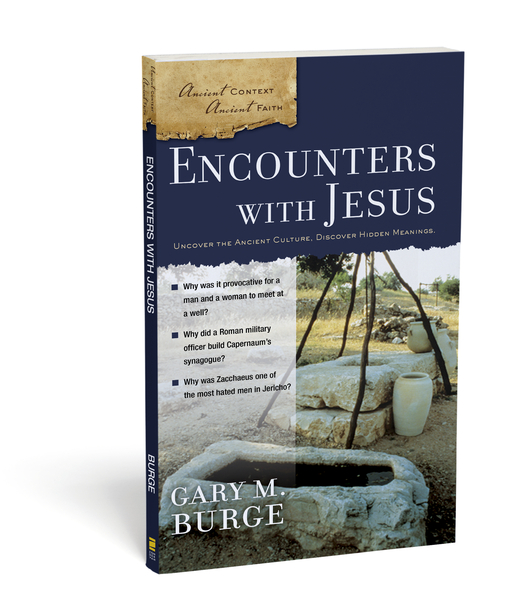
Book Review : Encounters with Jesus (Ancient Context, Ancient Faith) : Gary Burge
A prevalent term for conversion in the contemporary church (at least at the turn of the century) is someone "coming to know Jesus personally." When someone turns from their sin and puts their trust in the Lord Jesus Christ for their righteousness, that person truly does come to know God in a personal way, as one claimed in the New Covenant and the indwelling, personal presence of the Holy Spirit. The Christian is someone who has come to know the God whom we had been at enmity with and come to know Him by His sovereign grace. So "knowing God" describes a change in relationship between the Christian and the Triune God. But a change in relationship sets the table for what follows in coming to know who God is, what He is like, and what He has done. Which is why we are greatly helped in applying ourselves to the great tasks of learning Scripture and learning about Scripture as it reveals to us the work and character of our great God.
Gary Burge's third entry in his series "Ancient Context, Ancient Faith" is entitled Encounters with Jesus and, like the previous two, the title doesn't veer much from accurately summing the book's content. Like the other two volumes, Encounters with Jesus is written in order to provide a better sense of the richness of Scripture by developing the context surrounding different passages or themes. And because reading about the Savior can help us, by grace, come to know Him better, this book can be particularly helpful for those looking for a more devotionally-applicable book supplying context to our understanding of Scripture.
The book is divided up into six chapters, the first of which is essentially an introduction. The first chapter opens by asking "Have you ever wondered what it would be like to encounter Jesus personally?" That question sets the tone well for and provides ample justification for remaining interested in this book that is uniquely devoted to developing the cultural context of five "major" encounters between individuals and the Savior recorded in the Gospel accounts.
The five encounters opened up by Dr. Burge in this volume involve:
Altogether, this book sits right alongside the other two entries in the series offered by Dr. Burge previously (The Bible and the Land and Jesus, the Middle Eastern Storyteller) in this series. This book does a serviceable job in providing a better and accessible understanding of the cultural relationships that set the background for the grace and mercy of the Lord Jesus poured out in the lives of certain individuals recorded in the Gospels. Hopefully that understanding pushes the reader to draw with greater expectancy to the throne of grace. Thanks to the folks at Zondervan for supplying me with a complimentary copy, without any expectation of a positive review.
Gary Burge's third entry in his series "Ancient Context, Ancient Faith" is entitled Encounters with Jesus and, like the previous two, the title doesn't veer much from accurately summing the book's content. Like the other two volumes, Encounters with Jesus is written in order to provide a better sense of the richness of Scripture by developing the context surrounding different passages or themes. And because reading about the Savior can help us, by grace, come to know Him better, this book can be particularly helpful for those looking for a more devotionally-applicable book supplying context to our understanding of Scripture.
The book is divided up into six chapters, the first of which is essentially an introduction. The first chapter opens by asking "Have you ever wondered what it would be like to encounter Jesus personally?" That question sets the tone well for and provides ample justification for remaining interested in this book that is uniquely devoted to developing the cultural context of five "major" encounters between individuals and the Savior recorded in the Gospel accounts.
The five encounters opened up by Dr. Burge in this volume involve:
- The woman with a chronic hemorrhage (as recorded in Matt. 9:18-26 & Mark 5:21-43)
- Zacchaeus the tax collector (as recorded in Luke 19:1-10)
- The Capernaum centurion (as recorded in Luke 7:1-10)
- The Samaritan woman at the well (as recorded in John 4:4-26)
- The Greek woman at Tyre (as recorded in Matt. 15:21-28 & Mark 7:24-30)
Altogether, this book sits right alongside the other two entries in the series offered by Dr. Burge previously (The Bible and the Land and Jesus, the Middle Eastern Storyteller) in this series. This book does a serviceable job in providing a better and accessible understanding of the cultural relationships that set the background for the grace and mercy of the Lord Jesus poured out in the lives of certain individuals recorded in the Gospels. Hopefully that understanding pushes the reader to draw with greater expectancy to the throne of grace. Thanks to the folks at Zondervan for supplying me with a complimentary copy, without any expectation of a positive review.
Thursday, October 25, 2012
Book Review : Jesus, the Middle Eastern Storyteller (Ancient Context, Ancient Faith) : Gary Burge
The broader series objective remains the same for this second book in the "Ancient Context, Ancient Faith" series, released by Zondervan. Attempting to address deficiencies in Bible background held commonly by Christians without formal biblical training or sustained interest in issues of biblical culture and history, Gary Burge provides this second entry, Jesus, the Middle Eastern Storyteller, in order to meet what is a sure need in the evangelical church at large. My earlier review of The Bible and the Land explains a bit more concerning the series, so the review for this and the remaining titles in the "Ancient Context, Ancient Faith" series will be much more brief and address the merits of the book individually and their value as an entry in the series.
Dr. Burge supplies fairly straightforward analyses of various story-types throughout this book, drawing primarily from the middle of Luke's Gospel, while also addressing Matthew's account of the parable of the unforgiving servant and a general introduction to the place of stories as a didactic method in first century Israel. Overall, the book meets a place of need so far as the general topic of the book is concerned. Sadly, many are easily persuaded to hold to some unhelpful cultural reinterpretations of Scripture, whether it be the vogue theologies of the day or outright liberal understandings of doctrine and Christology. Because of this, to have a scholar like Burge provide an entry that would appeal to the desire for "unlocking hidden meanings" while supplying orthodox backgrounds to ground the reader is of great value. Whether the reader is coming from a perspective needing significant correction or just wants to fill in some gaps, this book does a fine job serving the purpose of painting a helpful, biblical, and accurate picture concerning some of the central stories employed as teaching tools by the Savior.
The popularity of the stories addressed by Dr. Burge lends a particular degree of helpfulness to the level of applicability owned by the book. Addressing parables from Luke 15 and the Good Samaritan has tremendous potential benefit because they are among the most (American) culturally popular passages to be found in the Gospels. Because each chapter is under 20 pages in length, one sitting can yield a helpful amount of information without a great degree of time commitment on the part of the reader. And, because Dr. Burge provides background without delving into bizarre assumptions or assessments found among other books attempting to account for the cultural context of Scripture, the content is orthodox.
By and large, this book would be a fine, inexpensive, and helpful addition to the library of any Christian wanting to squeeze a bit more out of some significant parable/story passages found in the Gospels. My only complaint with the book is that it doesn't broaden its scope to include more from the other Gospels, particularly Matthew, which is, like Luke, heavily stocked with content that would fit the bill for Burge's stated aim of contextualizing the story content of the Gospels. Nevertheless, the book does its job and does so in manageable, engaging, and helpful chapters that are accessible to a wide audience.
Dr. Burge supplies fairly straightforward analyses of various story-types throughout this book, drawing primarily from the middle of Luke's Gospel, while also addressing Matthew's account of the parable of the unforgiving servant and a general introduction to the place of stories as a didactic method in first century Israel. Overall, the book meets a place of need so far as the general topic of the book is concerned. Sadly, many are easily persuaded to hold to some unhelpful cultural reinterpretations of Scripture, whether it be the vogue theologies of the day or outright liberal understandings of doctrine and Christology. Because of this, to have a scholar like Burge provide an entry that would appeal to the desire for "unlocking hidden meanings" while supplying orthodox backgrounds to ground the reader is of great value. Whether the reader is coming from a perspective needing significant correction or just wants to fill in some gaps, this book does a fine job serving the purpose of painting a helpful, biblical, and accurate picture concerning some of the central stories employed as teaching tools by the Savior.
The popularity of the stories addressed by Dr. Burge lends a particular degree of helpfulness to the level of applicability owned by the book. Addressing parables from Luke 15 and the Good Samaritan has tremendous potential benefit because they are among the most (American) culturally popular passages to be found in the Gospels. Because each chapter is under 20 pages in length, one sitting can yield a helpful amount of information without a great degree of time commitment on the part of the reader. And, because Dr. Burge provides background without delving into bizarre assumptions or assessments found among other books attempting to account for the cultural context of Scripture, the content is orthodox.
By and large, this book would be a fine, inexpensive, and helpful addition to the library of any Christian wanting to squeeze a bit more out of some significant parable/story passages found in the Gospels. My only complaint with the book is that it doesn't broaden its scope to include more from the other Gospels, particularly Matthew, which is, like Luke, heavily stocked with content that would fit the bill for Burge's stated aim of contextualizing the story content of the Gospels. Nevertheless, the book does its job and does so in manageable, engaging, and helpful chapters that are accessible to a wide audience.
Monday, October 1, 2012
Book Review : A Theology of Luke and Acts (Biblical Theology of the New Testament) : Darrell Bock
When associating biblical scholars with their area of specialty, the realm of Lucan studies (at least in my mind) belongs to Darrell Bock. His two volume commentaries on Luke and one volume on Acts in the Baker Exegetical Commentary on the New Testament series are commonly regarded by conservative evangelical scholars as close to, if not the best available. Bock's acquaintance with the Lucan material is unquestionably deep and his work on the material will most likely be, taken together, his magnum opus contribution to the field of biblical studies. For depth of treatment and faithfulness in scholarship to Luke-Acts as the very Word of God, Bock is arguably the number one draft pick to take if treating the inspired physician's New Testament contributions is your priority.
In 2009, Andreas Kostenberger published the inaugural volume of a series plainly called Biblical Theology of the New Testament. His contribution, which I have not finished reading, addresses a theology of John's Gospel and letters. I found the portion of the book I've read to be helpful. When I saw that Bock would be releasing the next volume in the series on Luke-Acts, I was excited and looked forward to reading a biblical theological treatment of Luke's NT contribution.
I began reading Bock's book, A Theology of Luke and Acts: God's Promised Program, Realized for All Nations, with high hopes. And, altogether, the book doesn't disappoint in providing an encyclopedic treatment of the themes Dr. Bock writes about in his contribution to the BTNT series. The book is, above all things, informative. If you have a question about how Luke addresses a particular matter, consulting this volume could be a first stop for you. That being said, I have to say I found it difficult to make it through the book for the following reasons:
1) As noted, the book is informative. It reads more as a reference volume and less as a contribution to a series that seeks to connect biblical theological dots. This isn't a knock on the book as a matter of content, necessarily. However, it is to say that it's not as engaging as I expected and doesn't provide as many new angles on biblical theology as I expected. I'm certainly not looking for bizarre interpretations of texts, but I was hoping to be helped by a Lucan scholar to string things together in a more memorable way. This, I suggest, is the primary weakness I found with the book.
2) I was hoping to find Bock addressing some of the more controversial issues that find justification in Acts, particularly, from a solid biblical perspective. The explosion of the charismatic movement over the past hundred years has given rise to a generation of Christians who have an understanding of Acts that is largely deficient. It would have been very helpful for Bock to write more (as he does address it somewhat, though, in my opinion, not nearly enough) on the way that Acts functions as a descriptive/prescriptive book in relation to other portions of the Scriptures. That would have probably been the most needed thing to take away from a book like this and I'm disappointed that it wasn't addressed, seeing as there is both a deep pastoral need and it fits within the parameters of a book devoted to addressing Luke's relationship to biblical theology. After reading the book, this would be my primary request for something that wasn't handled and could/should have been.
These things being said, Bock does a fine job of presenting the material and staying in bounds with Luke-Acts. His integrity as a Lucan scholar is clear throughout the book and he doesn't wander into unnecessary territory. Apart from the above, there's not much one can find fault with in this book and it would do any man well who has a responsibility to preach or teach Luke and Acts to get a copy of this book to support that work.
Altogether, Dr. Bock's contribution to the Biblical Theology of the New Testament series was not as enjoyable as I expected, though it wasn't because the book veers off a cliff anywhere. It just wasn't as readable. As a reference volume, the book does a fine job (with the primary exception of my concern regarding the normative nature of Acts, particularly). I would not recommend it as a book to "read through," but rather as a book to "consult," in order to give a healthier perspective on themes in Luke and Acts. Thank you to the folks at Zondervan for providing a complimentary copy without expectation of a positive review.
In 2009, Andreas Kostenberger published the inaugural volume of a series plainly called Biblical Theology of the New Testament. His contribution, which I have not finished reading, addresses a theology of John's Gospel and letters. I found the portion of the book I've read to be helpful. When I saw that Bock would be releasing the next volume in the series on Luke-Acts, I was excited and looked forward to reading a biblical theological treatment of Luke's NT contribution.
I began reading Bock's book, A Theology of Luke and Acts: God's Promised Program, Realized for All Nations, with high hopes. And, altogether, the book doesn't disappoint in providing an encyclopedic treatment of the themes Dr. Bock writes about in his contribution to the BTNT series. The book is, above all things, informative. If you have a question about how Luke addresses a particular matter, consulting this volume could be a first stop for you. That being said, I have to say I found it difficult to make it through the book for the following reasons:
1) As noted, the book is informative. It reads more as a reference volume and less as a contribution to a series that seeks to connect biblical theological dots. This isn't a knock on the book as a matter of content, necessarily. However, it is to say that it's not as engaging as I expected and doesn't provide as many new angles on biblical theology as I expected. I'm certainly not looking for bizarre interpretations of texts, but I was hoping to be helped by a Lucan scholar to string things together in a more memorable way. This, I suggest, is the primary weakness I found with the book.
2) I was hoping to find Bock addressing some of the more controversial issues that find justification in Acts, particularly, from a solid biblical perspective. The explosion of the charismatic movement over the past hundred years has given rise to a generation of Christians who have an understanding of Acts that is largely deficient. It would have been very helpful for Bock to write more (as he does address it somewhat, though, in my opinion, not nearly enough) on the way that Acts functions as a descriptive/prescriptive book in relation to other portions of the Scriptures. That would have probably been the most needed thing to take away from a book like this and I'm disappointed that it wasn't addressed, seeing as there is both a deep pastoral need and it fits within the parameters of a book devoted to addressing Luke's relationship to biblical theology. After reading the book, this would be my primary request for something that wasn't handled and could/should have been.
These things being said, Bock does a fine job of presenting the material and staying in bounds with Luke-Acts. His integrity as a Lucan scholar is clear throughout the book and he doesn't wander into unnecessary territory. Apart from the above, there's not much one can find fault with in this book and it would do any man well who has a responsibility to preach or teach Luke and Acts to get a copy of this book to support that work.
Altogether, Dr. Bock's contribution to the Biblical Theology of the New Testament series was not as enjoyable as I expected, though it wasn't because the book veers off a cliff anywhere. It just wasn't as readable. As a reference volume, the book does a fine job (with the primary exception of my concern regarding the normative nature of Acts, particularly). I would not recommend it as a book to "read through," but rather as a book to "consult," in order to give a healthier perspective on themes in Luke and Acts. Thank you to the folks at Zondervan for providing a complimentary copy without expectation of a positive review.
Wednesday, September 26, 2012
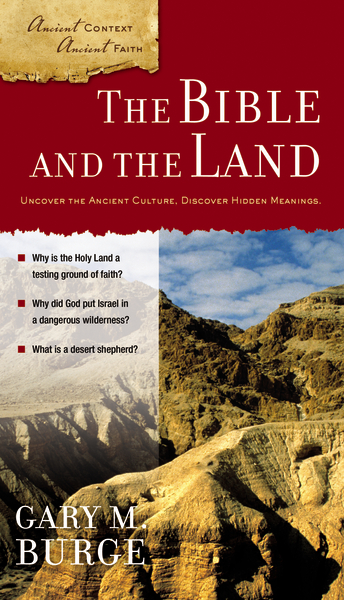
Book Review : The Bible and the Land (Ancient Context, Ancient Faith) : Gary Burge
If you've ever seen an illustration of "How to Prioritize Your Time" that involves big rocks, little rocks, and sand, you'll appreciate what Gary Burge sought to do with the Ancient Context, Ancient Faith series. And if you're not familiar with that illustration, here's a quick catch-up: the gist of it is that if you have a jar and want to fit in all three components discussed above, there is really only one best way to do it and that's by getting the biggest things in first and working your way down to the fine grain sand that ends up filling in all the gaps. Once you get the main priorities taken care of, you can keep working down until you get to work on finer details. The same can be said for how we relate to our knowledge of Scripture: we start out with the big rocks of the gospel itself and the gospel's implications for living as the set apart people of the Triune God and continue having the gaps filled in with broader and deeper knowledge of the things of God.
Dr. Burge has provided, in a series of short and engaging books released over the past few years, some great pebbles to help fill in gaps of understanding that are naturally present for those living outside the time and culture in which the Scriptures were first penned. This series of books, spanning six volumes, is written by Drs. Burge, Timothy Laniak, and Bradley Nassif with the goal of exploring "themes from the biblical world that are often misunderstood." Think of the books as literary tour guides that have the benefit of being well-researched and written by men with years of study informing what they're passing along to you. That's at the heart of this series, Ancient Context, Ancient Faith, published by Zondervan.
The first book released in this series is titled The Bible and the Land. Don't look for any hidden meanings in the title. Though you'll be helped to better understand the "lay of the land," you won't find it wrapped up in flashy wrapping paper. In that sense, the title of the book communicates fairly clearly the content you'll find: how the land informs the imagery of the Scriptures and the experience of the folks you'll find throughout the Bible. And, frankly, that's right on par with what a series like this should be getting across. With far too many people making bizarre claims that misinform the genuine believers looking for more helpful Bible background, this book camps out on appropriate themes and treats them solidly.
The book weighs in at just over 100 pages and is populated with pictures on most every page. This makes the book very readable and particularly readable on a casual (pick-up/put-down) basis. The chapters address the following themes, beyond the Introduction: "The Land," "Wilderness," "Shepherds," "Rock," "Water," "Bread," and "Names." As with the title of the book, the chapters aren't intended to grip your attention. However, the content is very helpful and serves to fill in gaps that may exist between how you read a passage and the richer background informing it. A good example of that background-informing helpfulness comes in Burge's comparison (with pictures) of a traditional loaf of Israeli bread and the limestone common in Israel. He helpfully draws out the comparable appearance of the two and then draws our attention to both the wilderness temptation recorded in Matthew 4:3 and the Savior's words on the Father's graciousness toward His prayerful people in Matthew 7:9.
Altogether, the book is helpful, clear, and readable. The presence of so many pictures helps move the background material away from remaining abstract and puts "a face to a name." And with the relatively short length of the book, it's hard to be disinterested in finishing it. The Bible and the Land is a useful volume for filling in the gaps and sets the tone for the rest of the series. The book (as well as the other volumes in the series) would do well for personal Bible study, homeschooling, or even for use in mentoring/discipleship. Thanks to the folks at Zondervan for supplying me with a complimentary copy, without the expectation of positive review.
Dr. Burge has provided, in a series of short and engaging books released over the past few years, some great pebbles to help fill in gaps of understanding that are naturally present for those living outside the time and culture in which the Scriptures were first penned. This series of books, spanning six volumes, is written by Drs. Burge, Timothy Laniak, and Bradley Nassif with the goal of exploring "themes from the biblical world that are often misunderstood." Think of the books as literary tour guides that have the benefit of being well-researched and written by men with years of study informing what they're passing along to you. That's at the heart of this series, Ancient Context, Ancient Faith, published by Zondervan.
The first book released in this series is titled The Bible and the Land. Don't look for any hidden meanings in the title. Though you'll be helped to better understand the "lay of the land," you won't find it wrapped up in flashy wrapping paper. In that sense, the title of the book communicates fairly clearly the content you'll find: how the land informs the imagery of the Scriptures and the experience of the folks you'll find throughout the Bible. And, frankly, that's right on par with what a series like this should be getting across. With far too many people making bizarre claims that misinform the genuine believers looking for more helpful Bible background, this book camps out on appropriate themes and treats them solidly.
The book weighs in at just over 100 pages and is populated with pictures on most every page. This makes the book very readable and particularly readable on a casual (pick-up/put-down) basis. The chapters address the following themes, beyond the Introduction: "The Land," "Wilderness," "Shepherds," "Rock," "Water," "Bread," and "Names." As with the title of the book, the chapters aren't intended to grip your attention. However, the content is very helpful and serves to fill in gaps that may exist between how you read a passage and the richer background informing it. A good example of that background-informing helpfulness comes in Burge's comparison (with pictures) of a traditional loaf of Israeli bread and the limestone common in Israel. He helpfully draws out the comparable appearance of the two and then draws our attention to both the wilderness temptation recorded in Matthew 4:3 and the Savior's words on the Father's graciousness toward His prayerful people in Matthew 7:9.
Altogether, the book is helpful, clear, and readable. The presence of so many pictures helps move the background material away from remaining abstract and puts "a face to a name." And with the relatively short length of the book, it's hard to be disinterested in finishing it. The Bible and the Land is a useful volume for filling in the gaps and sets the tone for the rest of the series. The book (as well as the other volumes in the series) would do well for personal Bible study, homeschooling, or even for use in mentoring/discipleship. Thanks to the folks at Zondervan for supplying me with a complimentary copy, without the expectation of positive review.
Thursday, September 20, 2012
Book Review : frameworks : Eric Larson
While I was in seminary, we were frequently assigned an Old Testament or New Testament Introduction book as a bird's eye view of the biblical books covered in the course. My experience with these "Introductions," however, made clear to me that the introductory nature of those volumes referred more to the relatively short treatment of each biblical book and not the quality or accessibility of the treatment. Which means that an average OT/NT Introduction book may very well be intimidating for folks who are genuinely seeking a better understanding of Scripture, yet don't have the supporting resources provided in a seminary environment.
This presents a fairly wide gap in the literature available to the vast majority of Christians seeking help in understanding the literary background of the most important Book around. The Bible is the very Word of God and careful handling of the Word shouldn't be alone practiced by those men called to shepherd the local church in pastoral ministry. The Scriptures necessitate responsible handling by all, which can be helped by the responsible use of a volume that treats the big picture, background, authorship, and intent of the books comprising the Old and New Testaments. In writing frameworks, Eric Larson seeks to fill this void with an accessible resource he labels "An Extraordinary Guide for Ordinary People."
Mr. Larson's efforts are, by and large, helpful and function as they are intended. Nowhere does he intimate that this book is intended to replace Guthrie's New Testament Introduction. His style of writing is accessible (more on that below) and the book's structure is memorable and helpful. Though the book's content comes in around 350 pages, it is graphically rich and presents helpful images that capture the theme he intends to communicate. The scholarship draws water up from disputed wells so as not to confuse readers with unnecessary adventures into academia. It is, largely, a fairly helpful resource.
There are a couple things that I would encourage future efforts in this vein to avoid. Larson's writing, intentionally accessible, is, at times, a bit too casual. Titus is compared to Red Adair and, while I understand his rationale, this example - along with others - displays a bit too much liberty taken in characterizing the people and literature of the New Testament. It is memorable, but may not be helpful and accurate in its memorability. Additionally, while I recognize the desire to avoid over-complicating issues of scholarship, there is a lack of complexity to his treatment that may oversimplify some things. The only issue I found with the content itself was what seemed to be a portrayal of the Law and Old Testament institutions that was only abolished by Christ instead of fulfilled. It might be me being picky, but I believe it makes a big difference when we look at the Old Testament finding its fulfillment in the Savior, rather than a sense of abandonment for the New. Otherwise, frameworks would find a decent home in most any evangelical church.
Altogether, Mr. Larson has done a very decent job in providing a resource to Christians seeking to gain a better understanding of Scripture without the intimidating likeness belonging to a number of resources that are otherwise very helpful. This book, with the slight reservations mentioned above, would do well for any Christian to pick up and gain a more helpful understanding of the New Testament. Thank you to the publisher for providing a complimentary review copy, which was provided to me free from expectation of a positive review or recommendation.
This presents a fairly wide gap in the literature available to the vast majority of Christians seeking help in understanding the literary background of the most important Book around. The Bible is the very Word of God and careful handling of the Word shouldn't be alone practiced by those men called to shepherd the local church in pastoral ministry. The Scriptures necessitate responsible handling by all, which can be helped by the responsible use of a volume that treats the big picture, background, authorship, and intent of the books comprising the Old and New Testaments. In writing frameworks, Eric Larson seeks to fill this void with an accessible resource he labels "An Extraordinary Guide for Ordinary People."
Mr. Larson's efforts are, by and large, helpful and function as they are intended. Nowhere does he intimate that this book is intended to replace Guthrie's New Testament Introduction. His style of writing is accessible (more on that below) and the book's structure is memorable and helpful. Though the book's content comes in around 350 pages, it is graphically rich and presents helpful images that capture the theme he intends to communicate. The scholarship draws water up from disputed wells so as not to confuse readers with unnecessary adventures into academia. It is, largely, a fairly helpful resource.
There are a couple things that I would encourage future efforts in this vein to avoid. Larson's writing, intentionally accessible, is, at times, a bit too casual. Titus is compared to Red Adair and, while I understand his rationale, this example - along with others - displays a bit too much liberty taken in characterizing the people and literature of the New Testament. It is memorable, but may not be helpful and accurate in its memorability. Additionally, while I recognize the desire to avoid over-complicating issues of scholarship, there is a lack of complexity to his treatment that may oversimplify some things. The only issue I found with the content itself was what seemed to be a portrayal of the Law and Old Testament institutions that was only abolished by Christ instead of fulfilled. It might be me being picky, but I believe it makes a big difference when we look at the Old Testament finding its fulfillment in the Savior, rather than a sense of abandonment for the New. Otherwise, frameworks would find a decent home in most any evangelical church.
Altogether, Mr. Larson has done a very decent job in providing a resource to Christians seeking to gain a better understanding of Scripture without the intimidating likeness belonging to a number of resources that are otherwise very helpful. This book, with the slight reservations mentioned above, would do well for any Christian to pick up and gain a more helpful understanding of the New Testament. Thank you to the publisher for providing a complimentary review copy, which was provided to me free from expectation of a positive review or recommendation.
Thursday, August 30, 2012
Swimming Lessons, Chicken McNuggets and the Enlightenment
I really tried to come up with a catchier title than "Swimming Lessons, Chicken McNuggets and the Enlightenment," but that title alone warrants an explanation. And you're probably wondering what that explanation is. Well, hold tight and rest assured, there's a point to all of this.
One of my favorite memories from my childhood is the scent I'd pick up, almost without fail, every time I got into the car after swimming lessons. Swimming lessons aren't, in themselves, a very fond memory for me. But for some reason, almost every time I got in the car after swimming lessons, I would smell Chicken McNuggets. I don't know if this was wishful thinking on my part or if anyone else has ever had that experience. But whatever it was, it's one of those comforting scents that has stuck with me over the years.
Needless to say, a lot changes between your 10th trip around the sun and your 20th. Happy Meals don't bring the promised happiness anymore. Eating at McDonalds turns into a last ditch effort to satisfy hunger. And, while it might be a "natural" phenomenon to find most people in their adolescent years and early twenties trying to distance themselves from things that just aren't "cool," I've noticed something: it's not just a post-adolescent issue any longer. It's a cultural issue.
We live in a culture suspicious of the common. I say suspicious, because it's not only passe to shop at WalMart or buy a Happy Meal for your kids, we're convinced by pop culture that it's downright dangerous. What restaurant does your mind think about when you hear this: Do you know what they put in that stuff? Or what store do you think about when you hear this: Do you know how much they pay their employees and where they get their products? Without debating the merits of fried food or clothes made in China, it's fairly clear that we're supplied with reasons to be suspicious of things that aren't "specialty" or stores that help us "live our lives." Exposing the practices at your local Burger King will land a spot in the headlines - showing up and doing the same at Qdoba? Not so much.
All of this goes back to a revolution in our cultural thought that took place a couple hundred years back during "the Enlightenment." The Enlightenment was helpful in some respects, encouraging a more robust use of our minds. For the Christian, a sadly neglected venue for worship is the life of the mind. The Great Commandment includes love of God by way of our thinking and the challenges of the Enlightenment served as a catalyst (even if it was in response to some arrogant worldviews) for the church to engage our thinking for the glory of God. However, the cultural fallout from the Enlightenment was not so positive. At its core, the Enlightenment championed a philosophy that was even too radical for pagan Greece and can be summed up by way of Protagoras' statement: "Man is the measure of all things." That concept drove Enlightenment thinking and still drives popular thought about the self in relation to the world to this day. What you feel, what you think, what you sense about the world around you is, in the final analysis, what matters most. Objectivity and subjectivity are blurred together and we are left to ourselves to decide not only matters of right and wrong, but matters of truth and falsehood.
So how has the Enlightenment affected our view of things common? Here's my take on it: the cultural move to (ultimately) de-objectivize everything has cheated people out of the sense of uniqueness we ought to have as beings created to glorify God and enjoy Him forever. Instead of finding an identity outside of ourselves, we've been told that our identity is up to us to either realize or construct for ourselves. Instead of understanding we were created for the purpose of glorifying God, we've been told that we are chance accidents, a collection of cells that could just as well have ended up arranged as a prairie dog. Instead of understanding our work as a calling, we've been told it's there to pay the bills so we can spend the rest of our time trying to figure out or live out who we are. It's a wholesale cheapening of human existence - and if that's all we are, who wants to be or be associated with something common?
When I became a dad, I renewed my license to stop at McDonalds and buy Chicken McNuggets. And you know what? I still like them. Particularly with the barbecue sauce served in the containers with foil that, if you're not careful, will end up adhering to surfaces via the residual sauce. So there's some food for thought today. It's not deep and weighty theology. But it's been on my mind lately. Let me finish by saying: you can eat a Happy Meal to the glory of God. I should be back in a day or two with more from Studies in the Sermon on the Mount.
To God Alone Be the Glory,
-Chris
Needless to say, a lot changes between your 10th trip around the sun and your 20th. Happy Meals don't bring the promised happiness anymore. Eating at McDonalds turns into a last ditch effort to satisfy hunger. And, while it might be a "natural" phenomenon to find most people in their adolescent years and early twenties trying to distance themselves from things that just aren't "cool," I've noticed something: it's not just a post-adolescent issue any longer. It's a cultural issue.
We live in a culture suspicious of the common. I say suspicious, because it's not only passe to shop at WalMart or buy a Happy Meal for your kids, we're convinced by pop culture that it's downright dangerous. What restaurant does your mind think about when you hear this: Do you know what they put in that stuff? Or what store do you think about when you hear this: Do you know how much they pay their employees and where they get their products? Without debating the merits of fried food or clothes made in China, it's fairly clear that we're supplied with reasons to be suspicious of things that aren't "specialty" or stores that help us "live our lives." Exposing the practices at your local Burger King will land a spot in the headlines - showing up and doing the same at Qdoba? Not so much.
All of this goes back to a revolution in our cultural thought that took place a couple hundred years back during "the Enlightenment." The Enlightenment was helpful in some respects, encouraging a more robust use of our minds. For the Christian, a sadly neglected venue for worship is the life of the mind. The Great Commandment includes love of God by way of our thinking and the challenges of the Enlightenment served as a catalyst (even if it was in response to some arrogant worldviews) for the church to engage our thinking for the glory of God. However, the cultural fallout from the Enlightenment was not so positive. At its core, the Enlightenment championed a philosophy that was even too radical for pagan Greece and can be summed up by way of Protagoras' statement: "Man is the measure of all things." That concept drove Enlightenment thinking and still drives popular thought about the self in relation to the world to this day. What you feel, what you think, what you sense about the world around you is, in the final analysis, what matters most. Objectivity and subjectivity are blurred together and we are left to ourselves to decide not only matters of right and wrong, but matters of truth and falsehood.
So how has the Enlightenment affected our view of things common? Here's my take on it: the cultural move to (ultimately) de-objectivize everything has cheated people out of the sense of uniqueness we ought to have as beings created to glorify God and enjoy Him forever. Instead of finding an identity outside of ourselves, we've been told that our identity is up to us to either realize or construct for ourselves. Instead of understanding we were created for the purpose of glorifying God, we've been told that we are chance accidents, a collection of cells that could just as well have ended up arranged as a prairie dog. Instead of understanding our work as a calling, we've been told it's there to pay the bills so we can spend the rest of our time trying to figure out or live out who we are. It's a wholesale cheapening of human existence - and if that's all we are, who wants to be or be associated with something common?
When I became a dad, I renewed my license to stop at McDonalds and buy Chicken McNuggets. And you know what? I still like them. Particularly with the barbecue sauce served in the containers with foil that, if you're not careful, will end up adhering to surfaces via the residual sauce. So there's some food for thought today. It's not deep and weighty theology. But it's been on my mind lately. Let me finish by saying: you can eat a Happy Meal to the glory of God. I should be back in a day or two with more from Studies in the Sermon on the Mount.
To God Alone Be the Glory,
-Chris
Thursday, June 28, 2012
Book Review: The Cross and Christian Ministry
I had two endorsements of this book in the back of my mind before even beginning it. The first came from my former lead pastor, whom I remember speaking very highly of The Cross and Christian Ministry. The second is the fact that there has been little, if anything, that Dr. Carson has written and I have not benefited from. So coming to the book, I had expectations that this volume would follow along those lines and be generally helpful and biblically faithful. Without surprise, Dr. Carson's work succeeds at both points.
Let me begin by saying that the Corinthian letters hold, in my opinion, some of the most necessary corrections for the American church today. The nature of the letters as corrective generally lends themselves to addressing "problems" in the life of the church. The problems developing in American evangelicalism increasingly reflect the issues present among the confused Corinthians. Which makes any venture into these letters a profitable one for the pastor/elder or Christian looking to understand what faithful ministry (and Christian living) looks like in an environment hostile to the unique design the gospel supplies to the character of Christian life and ministry. Dr. Carson also wrote a book entitled A Model of Christian Maturity, which takes up some of the issues in 2 Corinthians. Both of these books are very helpful and I would generally recommend both of them as faithful in accomplishing their stated purposes.
The Cross and Christian Ministry takes up various passages in the first Corinthian letter and applies them to the contemporary Christian and Christian leader. Without going into the details of each chapter, it suffices to say that the themes drawn from the letter are more than necessary for any Christian (most certainly the pastor) to have a solid understanding of. The fundamental disparity between the world's values and the gospel's values, between the priorities of fallen men and the priorities of Jesus Christ, are so glaringly evident to us, yet very difficult to leave the former to pursue the latter. And that's where the Corinthian letters, particularly the first, have so much to say to those of us who are tempted to assume worldly priorities and cloak them with Christian garb. Dr. Carson draws out the priorities of a cross-centered life and ministry that necessarily means change on the part of the earnest man of God.
The contents of this book are adapted from addresses delivered by Dr. Carson, which makes them inherently practical. Dr. Carson is particularly gifted in driving home solid theological content in engaging ways. Again, I have usually benefited from anything I have read written by D.A. Carson and this book stands in that line. While the book is shorter than others you might pick up by him, The Cross and Christian Ministry is still well worth the read and should be an assigned as an exit requirement for those graduating from seminary. Seasoned pastors would do well to come back to the priorities Dr. Carson draws out in this book. The Cross and Christian Ministry is a worthwhile book that supplies a much-needed perspective on genuine Christian ministry and living in light of the Cross.
(The folks at Baker Books kindly supplied me with a complimentary copy for review. I was not required to provide a positive review of the book.)
Let me begin by saying that the Corinthian letters hold, in my opinion, some of the most necessary corrections for the American church today. The nature of the letters as corrective generally lends themselves to addressing "problems" in the life of the church. The problems developing in American evangelicalism increasingly reflect the issues present among the confused Corinthians. Which makes any venture into these letters a profitable one for the pastor/elder or Christian looking to understand what faithful ministry (and Christian living) looks like in an environment hostile to the unique design the gospel supplies to the character of Christian life and ministry. Dr. Carson also wrote a book entitled A Model of Christian Maturity, which takes up some of the issues in 2 Corinthians. Both of these books are very helpful and I would generally recommend both of them as faithful in accomplishing their stated purposes.
The Cross and Christian Ministry takes up various passages in the first Corinthian letter and applies them to the contemporary Christian and Christian leader. Without going into the details of each chapter, it suffices to say that the themes drawn from the letter are more than necessary for any Christian (most certainly the pastor) to have a solid understanding of. The fundamental disparity between the world's values and the gospel's values, between the priorities of fallen men and the priorities of Jesus Christ, are so glaringly evident to us, yet very difficult to leave the former to pursue the latter. And that's where the Corinthian letters, particularly the first, have so much to say to those of us who are tempted to assume worldly priorities and cloak them with Christian garb. Dr. Carson draws out the priorities of a cross-centered life and ministry that necessarily means change on the part of the earnest man of God.
The contents of this book are adapted from addresses delivered by Dr. Carson, which makes them inherently practical. Dr. Carson is particularly gifted in driving home solid theological content in engaging ways. Again, I have usually benefited from anything I have read written by D.A. Carson and this book stands in that line. While the book is shorter than others you might pick up by him, The Cross and Christian Ministry is still well worth the read and should be an assigned as an exit requirement for those graduating from seminary. Seasoned pastors would do well to come back to the priorities Dr. Carson draws out in this book. The Cross and Christian Ministry is a worthwhile book that supplies a much-needed perspective on genuine Christian ministry and living in light of the Cross.
(The folks at Baker Books kindly supplied me with a complimentary copy for review. I was not required to provide a positive review of the book.)
Wednesday, June 27, 2012
Book Review : Lost Letters of Pergamum
The world of Christian fiction isn't typically filled with a host of substantive, biblical, and obedience-provoking titles these days, at least so far as my impression of the landscape goes. If a book isn't about the Amish, it might as well stay off the fiction racks. Sadly, theology and a compelling story rarely seem to have a place together in the Christian publishing world. Reading through Bruce Longenecker's book The Lost Letters of Pergamum, however, proves to be an exception. Here's why:
(The folks at Baker Academic kindly supplied me with a complimentary copy for review. I was not required to provide a positive review of the book.)
- The book, while not strictly "fictional," is historical fiction - which basically means that the license taken to put words in the mouths of characters is a license taken with great attention to the probability that such characters would say what the author has them say. In the case of Longenecker's book, the dialogue mainly consists of a series of fictional letters sent back and forth between Antipas of Pergamum and Luke the Physician (and chronicler of Luke-Acts). What's fascinating about the interchange is that the characters are based on real men, with good biblical scholarship informing the content and style of their correspondence. It's not an historical stab in the dark, but a very real presentation of what an interaction between a first century Christian and pagan may have looked like, particularly those in the higher ranks of society. While the book is clearly fictional, nothing in it reads anachronistically. This needs to be done well for a book written as historical fiction and Longenecker does an excellent job of it.
- The attention to historical accuracy sets up the characters in a compelling way. Though I knew these letters were fictional, I remained interested to find out what would happen to the characters (some of whom, like the main characters themselves, were very real people in the first century).
- The evangelistic tone of Luke's letters to Antipas and the church's relationship to Antipas both made a significant impression on me. The way in which Luke respectfully and clearly engaged the pagan Antipas is a model for the kind of evangelism that usually happens in the workplace. Luke persisted in holding the truth before a man whom he initially knew through "professional" channels in a way that is highly instructive for those tempted to neglect speaking Scripture truth in favor of aimless "relationship building." Equally instructive is the way in which the church at Pegamum (at the fictional Antonius' house) openly received Antipas, while displaying genuine Christian living in their interactions. Both serve to convince Antipas of the truth of the gospel. I would not hesitate to suggest that Longenecker intentionally designed these interactions to instruct, which they do well.
- The first and twenty-first century risk of compromising the gospel is clearly in view, as one church shows a preference for comfort at the expense of their faithfulness to the Lord Jesus. It should not be overlooked that this was a real temptation for the apostolic church facing increasing persecution and lingers today. This, along with Antipas' eventual martyrdom, provide a sobering tone to the book that could otherwise be avoided in a fictional account. Those, along with other sobering moments, provide depth to the book.
(The folks at Baker Academic kindly supplied me with a complimentary copy for review. I was not required to provide a positive review of the book.)
Wednesday, June 13, 2012
Parents, Keep Reality Before Your Children: Buy Good Books
A number of months ago, I became convinced that as a dad, I had a responsibility to make sure that my kids were getting a steadier stream of truth through children's books than they were getting. If you're anything like us (and you very well might, because we're not like people who aren't like us and your family is probably like those who are like yours) you tend to accumulate books and toys for your kids quickly. Unexpectedly. In a way that seems like you had a subscription plan that delivered them to you while you were passed out somewhere. And most of the time, those books don't communicate a whole lot - or a whole lot that is true and hearty - about God and the gospel. That's what gripped me. As I looked at all the books that we had sitting around about how many animals you could count or stories about a mouse eating cookies, I felt strongly that I had a responsibility to my wife and children to make sure that they were "resourced" appropriately. I'm big on equipping as a priority in ministry and it was high time to make sure that my home was equipped to teach my little ones, even during play time, that life is about more than silly stories, nursery rhymes, or princesses.
At the end of the day, there's really nothing wrong with stories about princesses or ballerinas for little girls. It's the vacuum created of rich, true things when those other stories suck the air out of your home. A daily struggle ensues for every Christian parent, as we seek to lead our children to see the glory of God in the gospel, to see that life is not about getting more and more stuff, but loving God and loving people for His glory. And I don't want to tilt the struggle any more in the favor of worldliness and sin than it already is. So I decided to 'roid up my children's library with books that intentionally grounded my kids in the truth of God in ways that are entertaining, accessible, and biblically faithful - a really good mixture.
Ultimately, our family worship time is the place where the gloves come off and we, as a family, have our sparring matches against the encroaching values of worldliness and sin present in our own hearts, by praying, memorizing Scripture, going over a good, solid catechism (of the Spurgeon variety) questions, reading Scripture, singing praises to God, and talking about the Word of God. But it's not just there that my kids are learning truth. They need to exercise if they're going to be any good for the big events and that means I can't let them eat only dessert throughout the day and wonder why they're not caring about what we're doing during that important time. Their hearts are in our stewardship. And I'll tell you this: I'm certainly not going to let Dora the Explorer teach my kids more about life than godly men and women who have prayerfully sought to get some engaging and biblical content into our hands. So from one dad to other parents (or potential parents) - take your stand on what your kids books say about what you're trying to accomplish at home.
So You Want Some Examples, Eh?
That's my story. But here's where I want to really help you, if you're looking for it, get a solid start at putting together a decent set of books for your kids. All I'm going to say about the below books is that I don't think you can really go wrong if you add them to your home. They're all written in order to lead your kids to seeing God and Christian living rightly and biblically. Here's a list, with links to Westminster Theological Seminary's Bookstore website for you to look at. (WTS Bookstore has Amazon-ish prices, even better at times, as well as good, fast service. I give them a thumbs-up and encourage you to give them a look as an option for getting your books.) They also have a kids category for you to look through. Here are some top picks:Pilgrim's Progress
Get Wisdom!: 23 Lessons for Children About Living for Jesus
Gospel Story Bible
The Barber Who Wanted to Pray
The Donkey Who Carried a King
The Prince's Poison Cup
and here's the link to FAQ's about their children's section. It gives a good perspective on why they stock the books they do and links to different categories of children's books. It's well worth the time to look through what's out there.
These are just a few examples. But they're good. And you'll find a lot more, as most everything at WTS Bookstore is "trustworthy" and not going to teach your kids to live as Christians without knowing their need for Christ (like, sadly, a number of well-intentioned children's books can). I do hope that, if you're a parent, you take a good look at what your choices about media and books are teaching your children about life - and if its reinforcing what you really desire them to learn. Let's strive together to serve our children well for their good and God's glory.
To God Alone Be the Glory,
-Chris
Sunday, May 13, 2012
Studies in the Sermon on the Mount: Mourning What?
"Blessed are those who mourn, for they shall be comforted."
-Matthew 5:4
It's been a few days since visiting MLJ's Studies in the Sermon on the Mount. A little late, not forgotten. Today's chapter focuses on Matthew 5:4 and has to do with mourning. One of the benefits of reading through Scripture at a slower pace is the opportunity to track with the intent of the author or speaker. God has inspired Scripture intentionally and not with haphazardness. So if we take seriously MLJ's argument that all of the Beatitudes are related and have a sequence that "makes sense," we can start doing away with some misconceptions about them. And, like any Beatitude, this second one can be used, abused, and misused. We must come to this and ask, "What kind of mourning is the Savior talking about?" to gain a real sense of what the blessing of comfort spoken of here has to do with. Does this mean everyone on planet earth who is mourning (over one thing or another, from the loss of a child to the loss of their dictatorship over a country) will be comforted? Is there some kind of "universal blessedness" promised here? Does the audience matter? Should we "force" mourning? What is being talked about here?Hallmark Doesn't Help
Scripture is complete. Scripture is clear. And Scripture, from Genesis to Revelation, has themes and truth about God that becomes very clear when we go to it as its own interpreter, in the light-giving ministry of the Holy Spirit. If a passage of Scripture seems to make you turn your head like the dog in the RCA commercials, like it doesn't make any sense at all, one of the most helpful things you can do is ask this question: Based on what I know about the Bible and what other "clearer" passages have to say about what's in question, what does this passage not mean? That's probably one of the more helpful questions to understanding hard passages and its not usually the first we want to have answered. We're quick to want the kernel of application and not so quick to want to know how to get it. So when we come to something that seems like it could be - and has been - taken way out of context, how do we understand it?In short, coming to the Word of God and taking one verse here or there isn't as helpful as it is popular. I've seen "Christian" Valentine's Day cards that go out of their way to find a verse that has love in it, but doesn't make biblical sense to use it that way. And to fire off a "Blessed are those who mourn, for they shall be comforted" to anyone and everyone is like sending off a greeting card that says (true story) "I have derived much joy and comfort from your love" as a romantic gesture. Paul was telling Philemon what a blessing it was that he had served the saints so well and faithfully. Frankly, it would just be better to write "I love you and here are the dozens of reasons why" and fill in the blanks than to chop up a passage of Scripture and use it out of context. Words matter much more than that!
Mourning What?
So what kind of mourning is in view here? Here is what MLJ has to say: "Our Lord did not say that those who mourn in a natural sense are happy, meaning by 'mourning', the sorrow experienced because of the death of someone. . . . As we saw that poverty of spirit was not something financial, but something essentially spiritual, so this again is something entirely spiritual and has nothing to do with our natural life in this world" (Studies, 43-44). Whoa. Is this too harsh? Is Lloyd-Jones guilty of "over-spiritualizing"? In one sense, I think we need to be careful to not over-correct the false impressions we get of these things. There is comfort for those who are in Christ and mourn. The Scriptures are clear about God's compassion and care for His people. And in one sense, every bit of mourning that happens in this fallen world is a result of sin. So yes, the comfort that comes to those who mourn has to do with real stuff, a real grief over the fallenness of this world. But what MLJ points out - and this is what we have to see - is the kind of mourning that follows right on the heels of poverty of spirit. If someone knows themselves bankrupt of any righteousness that will be acceptable before God, what must they mourn? How do mourning and poverty of spirit relate?The answer, Lloyd-Jones suggests, is to see that the threshold of conversion is stained with tears mourning sin and its sinfulness. And as a very, very practical point of application, he has this to say about the failure to recognize the place that mourning over sin has in the Christian life, even characterizing conversion to greater or lesser degrees: "I cannot help feeling that the final explanation of the state of the Church today is a defective sense of sin and a defective doctrine of sin. Coupled with that, of course, is a failure to understand the true nature of Christian joy. There is the double failure. There is not the real, deep conviction of sin as was once the case; and on the other hand there is this superficial conception of joy and happiness which is very different indeed from that which we find in the New Testament. Thus the defective doctrine of sin and the shallow idea of joy, working together, of necessity produce a superficial kind of person and a very inadequate kind of Christian life" (Studies, 45).
These are certainly hard words. But if you give some thought to it, it won't take long to conclude that Lloyd-Jones hit the nail on the head more than half a century ago when he preached these words. And it hasn't gotten any better. When the garbage of health-wealth-prosperity teaching can convince millions that their best life is now and when the design to provide a shopping mall experience of take it as you like it Christianity marks so many churches, is it any wonder that the Gospel - the life-changing, world-changing, sin-killing, love-producing, God-glorifying Gospel - is not taking hold? We've got many folks who identify as "evangelical" Christians, yet don't know the Good News that makes evangelicalism evangelical. MLJ: "They have failed to see that they must be convicted of sin before they can ever experience joy. They do not like the doctrine of sin. They dislike it intensely and they object to its being preached. THey want joy apart from the conviction of sin. But that is impossible; it can never be obtained. Those who are going to be converted and who wish to be truly happy and blessed are those who first of all mourn" (Studies, 45). Indeed, happy are those who mourn, for they will be comforted. Not with the cheesy enticements and false promises of an illegitimate gospel - but with the comfort of God who welcomes sinners into His Kingdom, who extends gracious and open arms for a world at enmity with Him.
Again, MLJ says: "The man who truly mourns because of his sinful state and condition is a man who is going to repent; he is, indeed, actually repenting already. And the man who truly repents as the result of the work of the Holy Spirit upon him, is a man who is certain to be led to the Lord Jesus Christ. Having seen his utter sinfulness and hopelessness, he looks for a Savior, and he finds Him in Christ. . . . He sees in Him the perfect provision that God has made and immediately he is comforted. That is the astounding thing about the Christian life. Your great sorrow leads to joy, and without the sorrow there is no joy" (Studies, 49). Further, this goes on throughout the Christian life - mourning sin, our own and the sin of others, the sin that has brought this world into a ruinous fall - mourning it and finding fullness, hope, peace, and comfort in Christ.
So that's where we'll end for this installment. There is certainly more to be said, but I'll leave it off there. I've got a good, cheesy movie to watch with my wife and a late supper to eat. Meekness is up next and, Lord willing, that chapter will come in a couple two-three days, as we say around Wisconsin. Take care.
To God Alone Be the Glory,
-Chris
Monday, May 7, 2012
Weekly Where-to-Go: May 7th
The title might be a little forced, but hey - I like alliteration. I've really enjoyed Tim Challies' A La Carte postings with links of interest that he puts up on an almost daily basis. So I thought I'd join the club and put some links out that might be fun and helpful. Here's the round-up for this week:
The Gospel Project: Available for purchase today, this looks to be a really useful resource for the local church. Here's their own description: "The Gospel Project is a Christ-centered curriculum that examines the grand narrative of Scripture and how the gospel transforms the lives of those it touches. Over a three-year plan of study, each session immerses participants — adults, students, and kids — in the gospel through every story, theological concept, and call to missions from Genesis to Revelation." I love the Children Desiring God curriculum, but see this as another really solid option for introducing kids to the "big picture" of the Bible. There are some other interesting aspects of the curriculum that I'll let you check out on your own, but I do want to mention one thing that really sets The Gospel Project apart: it has separate (and I'm assuming) complementary tracks for children, youth, and adults. So moms and dads can be learning "together" with their kids, even if they're not in the same classroom. Plus, they have practical take-homes that can encourage families to put into practice what they're learning. Thumbs-up.
A Conversation with J.D. Greear on Teaching Kids the Gospel: Trevin Wax interviews J.D. Greear about the heart of a good kids curriculum. A good tie-in to look at with The Gospel Project in mind. Says Greear, "You want them understanding from the very beginning that this is about worship and about grace and that what they do for God is a response to what He has done for them."
The Campus Tsunami: An interesting look at the place of technology in education and its emerging role at top-notch schools. As an alum of Reformed Theological Seminary's Virtual Campus, I can attest to the benefit of providing a distance option at a quality school. Some of us just can't move our family across the country. Distance education is no longer just TV/VCR repair.
The Underestimated God: God's Ruthless, Compassionate Grace in the Pursuit of His Own Glory and His Ministers' Joy: Very good message by Ligon Duncan from this year's Together for the Gospel. And though it's very helpful pastors, it's not for pastors only.
Subscribe to:
Posts (Atom)