Showing posts with label book review. Show all posts

Thursday, February 27, 2014

Book Review : Formed for the Glory of God : Kyle Strobel


The author of the letter to the Hebrews wrote, "Remember your leaders, those who spoke to you the word of God. Consider the outcome of their way of life, and imitate their faith." (Heb. 13:7) While this directive has very much to do with the great privilege of learning from and imitating those whose leadership of the church is "local" and "direct," it also implies that considering the outcome of another believer, eminent in godliness, holds incredible value for the Christian. If the believer has been taken from a state of utter corruption and brought into sanctifying fellowship with Christ, then beholding God's artistry in a man's holiness is nothing short of a sight to a miracle of grace.
In the history of the church in America, few names are as significant as Jonathan Edwards. His ministry profoundly marked the American theological landscape as one who held fast to the sweet doctrines of grace and was a first-hand witness to the Great Awakening. The language Edwards employed in his sermons reflected a vision of Christ as glorious, supreme, beautiful, and eternally worthy of all delight and worship. Edwards was, however, not simply a producer of excellent sermons and weighty theology. He was a real man, a follower of Christ, whose pursuit of Jesus stood behind all his ministerial contributions. He knew what it was to walk with God and enjoy Him.
     In Formed for the Glory of God: Learning from the Spiritual Practices of Jonathan Edwards, Kyle Strobel writes of Edwards as a man whose walk with God is as imitable as his preaching and teaching are to be enjoyed. Surely, Edwards is significant as one who spoke the Word of God. By that account, his way of life is worth being considered, which Strobel strives to lay out in this book.
     Approaching the book, I was expecting to be more pointedly "discipled" by Edwards' teaching. What I found is a very helpful and balanced look at the vision of godliness that propelled Edwards and an exploration of the practices that Edwards employed in pursuit of that vision. This is not a biography proper - you won't find Strobel relating all of Edwards' life experiences and the impact of those experiences on his walk with God. Rather, Strobel puts together a kind of "systematic devotional theology" of Edwards' life. In this book, you won't necessarily find anything new or edgy. You won't find promises that following Edwards' "strategies" will somehow net you the same place in church history. Frankly, the book hearkens to a time that, while simpler in cultural trappings and distractions, holds forth a depth and complexity in the church's understanding and enjoyment of the Christian's relationship with God that surveying Edwards' practices will drive you to thinking "Where do I start?".
     The first section of the book provides an effective overview of a significant aspect of the spiritual disciplines that may often be overlooked: the enjoyment of God as enjoyable in Himself. Part One is relatively small compared to the rest of the book, but it is this section that sets apart this book as distinctly "Edwardsian" and provides a perspective on the practical pursuit of communion with God that is well to be recognized. In short, Strobel suggests that Edwards' pursuit of God was "A Journey Into Beauty." Unfortunately, this side of Edwards is often overlooked for the cultural obscuration attached to his name. While it may not be a practically-oriented section, it does give a view of Christian living that reflects Edwards' genuine concern to enjoy God as He is. Strobel ends the chapter with this helpful statement: "...the Christian life is a subtle cleaning of the glass to see him [God] for who he is, and therefore seeing yourself, life and the world for what they are."
     The second part of the book is concerned with the practical pursuits of Edwards' walk with God. This section is most certainly fodder for the believer who would earnest pursue God. What is helpful to note is that Strobel presents these pursuits of Edwards accessibly. There is not the sense of "Edwards was great at this - you are not - good luck trying to be like him." Approaching this section with a desire to grow, young and mature Christian alike should be challenged to a deeper and more enjoyable walk with Jesus. And, because these practices are God-centered, any hint of "mystical" experience can be moored to the theological vision that Edwards is so well and rightly known for.
     Altogether, this is a fine book that explores the vision and practical pursuit of God enjoyed by a man worthy, by God's grace, to be imitated for his godliness. Again, this is not a "theology of Edwards," but a review of Edwards' vision for pursuing God and an introduction to certain practices he employed in pursuit of that vision. It's a good and warm read and one certainly worthy of picking up as a matter of knowing the great and glorious Triune God more deeply. Thank you to the folks at InterVarsity Press for supplying a complimentary review copy without expectations of a positive review.



Thursday, December 13, 2012

Book Review : Transformed by God : New Covenant Life and Ministry : David Peterson

     Few theological themes exist more prominently throughout the Scriptures than that of covenants. While this review isn't the place for discussing the importance of covenants, it is the place to give a brief word on it, as Dr. Peterson's book, Transformed by God : New Covenant Life and Ministry, assumes a foundational understanding of just how important the presence of covenants throughout the Old Testament, particularly, find their way to fulfillment in the New Covenant sealed by Christ. So, to introduce this review and the theme generally, here we go:

     Covenants play a significant role throughout the Old Testament. The formal covenant exists at peaks throughout redemptive history, as God addresses His promises to major biblical figures: Abraham, Moses, and David. The general role of divine promises is asserted soon after the Fall, when God promised in the "proto-evangelion" that One would come who would stamp out the serpent. Since that anticipation in Genesis, there are more or less formal events that concern the promises of God to His people. The prophets Jeremiah and Ezekiel, however, are mouthpieces whereby a "New Covenant" would come about, a Covenant that would be fulfilled by God Himself. All of the other covenants and promises would ultimately find their converge point and fulfillment in the New Covenant. Which makes the New Covenant a very important aspect of redemptive history.

     Dr. Peterson's volume has to do with the proclamation of that New Covenant during the ministry of the prophet Jeremiah, in particular, and how the Covenant, "signed, sealed, and delivered," effects the people of God, our worship and ministry, the hearts of God's people, and our knowledge of God. This important reality indeed changes "everything" and Dr. Peterson's aim in writing this volume is admirable and more than appropriate. It is a commendable pursuit and an entry into what I would consider an "under-served" field of theology, particularly as it specifically concerns the New Covenant.

     The first four chapters of Transformed by God are adaptations of lectures delivered by Dr. Peterson, while the remaining two chapters are additions made to the work. To be fair, I have a good deal of respect for Dr. Peterson as a scholar. I own a couple other books by him, including his contribution to the Pillar Commentary series regarding Acts. There is no doubt that he is a fine scholar and theologian, I must say, however, that my experience with this book was not as engaging as I had hoped it would be. The book's content is solid, which alone merits a positive review on the grounds that it both addresses a very important theme and does so soundly. However, I found the book to be somewhat dry. This may have something to do with the adaptation of previous material or the extended time period I took to complete the book. Nonetheless, on such a major and largely unaddressed (in book form, at least) topic, I expected a bit more in the department of "engagement."

     I would certainly recommend Dr. Peterson's book to anyone looking to gain some perspective on the New Covenant and its implications for Christian life and ministry - that's the thrust of the book and, as I said, it does not fail in that regard. That being said, I would ensure that if you do read this book, that you stay intentionally engaged. Thank you to the folks at InterVarsity Press for supplying a complimentary review copy without expectations of a positive review.

Saturday, December 8, 2012

Book Review : The Acts of the Risen Lord Jesus (NSBT) : Alan Thompson

Two things to kick off this book review that I want to grab your attention right away :
  • It's my opinion that the book of Acts is arguably one of the least understood books in the New Testament. The misapplication of this valuable portion of sacred Scripture is, sadly, behind the development of some very unhealthy theology. Accordingly, getting the book "right" is absolutely critical for those responsible for handling the Word and leading in the local church.
  • Before I even get to the review itself, I have to say that Alan Thompson's entry into the New Studies in Biblical Theology series, The Acts of the Risen Lord Jesus (being reviewed here), is an extremely valuable read. It's a five star book and I hope that can encourage you to consider this book as a study aid in approaching the book of Acts.
That being said, here's the official "review":

     Over the past decade plus, InterVarsity Press has been releasing some excellent volumes in a series entitled "New Studies in Biblical Theology." With contributions from scholars such as David Peterson, Greg Beale, and Andreas Kostenberger, the NSBT series, which is edited by D.A. Carson, is a treasure chest of biblical theological insights that are academically rigorous and evangelically faithful. There is a lot of very helpful material to be found in these books (at least in the few I've looked at).

     How does Alan Thompson's entry, The Acts of the Risen Lord Jesus, which concerns a biblical theological framework for approaching the book of Acts, stack up to that reputation? With all of the out-of-the-strike-zone stuff out there regarding a theology of Acts, what kind of material does Thompson supply to the discussion? And with all of the differing interpretations of Acts, what really qualifies as a convincingly biblical theology of Acts? In light of all that background, I'm very happy to say that I found this book to be incredibly helpful. Frankly, I haven't read a more paradigm solidifying synthesis of theological analysis pertaining to a scriptural book/author in recent memory. It really is that well written and thoroughly biblical

     After introducing the book, Dr. Thompson supplies an initial framework for approaching New Testament theology, generally referred to as the "already/not-yet" description of the Kingdom of God. (If you're not familiar with that hermeneutic, check out Graeme Goldsworthy or George Eldon Ladd, who supplied some contemporary pioneer material on the Kingdom come/yet-to-come theology.) From that starting point, he treats the place of Jesus' death and resurrection in Luke's theology, with particular emphasis on how the resurrection is emphasized in Luke and Acts. Continuing, Dr. Thompson addresses what I think is one of the most critical areas of interpretation that fails to be understood in many deficient approaches to Acts: the missionary character of the book, particularly the expansion of God's Kingdom beyond ethnic Israel to include Gentiles throughout the earth. Chapter Four concerns the role of the Holy Spirit, which treatment by Dr. Thompson is excellent in its correction of the unhealthy doctrine of the Spirit held in many circles of popular evangelicalism today. Chapters Six and Seven address the role of two very significant factors in Old Covenant Judaism and the place that it takes in the life of the New Covenant community, as communicated by Luke. The final Chapter is a conclusion of the material.

     All things considered, while the book may be a bit more "technical" than some folks are used to, I would recommend that any Christian with an interest in understanding a biblical framework of Acts ought to pick this book up. Simply put, this book is well-written and thoroughly biblical. Thanks to the folks at InterVarsity Press for providing me a no-cost copy of this book for review purposes. While there was no expectation of a positive review on their part, I am glad to have had the opportunity to read through this excellent volume in the NSBT series.

Friday, November 23, 2012

Book Review : Dangerous Calling : Paul David Tripp

One of the things I appreciate about having a library card is that I can go online and find repair manuals for cars, look at them for free, and save a chunk of money on a) taking a car to the mechanic and b) showing up at AutoZone and buying one. It's a nice perk of the whole public library system, because while I may be eminently unqualified to open my own repair shop, the fact that others know what they're doing gives me some confidence to not consign all of my car repair needs to a "professional." Because frankly, at the end of the day, some of these repairs just aren't that difficult if you follow the manual. You just have to trust that someone actually knows the vehicle enough to tell you what to do.

Paul Tripp writes repair manuals for people. Solidly grounded in Scripture, the man has written some profoundly helpful materials that combine wisdom gained over the years, a readable style, helpful examples, and well-applied exposition of the Word of God. I have yet to find something of his that is not worth consulting concerning the issue it addresses and would unhesitatingly recommend that any Christian pick up a copy of one of his books to work into a better understanding of their own heart and the precious and sometimes painful process of growing in godliness.

I was excited, then, when I saw that Dr. Tripp was releasing a book geared especially towards the issues that face men called to serve in pastoral ministry. And the title of the book hits the sweet spot for communicating the core reality that serving as a shepherd of God's people is not simply about "showing up." Dangerous Calling: Confronting the Unique Challenges of Pastoral Ministry is a book that begins to tackle some otherwise sorely unaddressed issues facing pastors (both vocational and "lay" elders, more on that in a bit). Some of the chapter titles include "Big Theological Brains and Heart Disease," "More than Knowledge and Skill," "The Missing Community," "Mediocrity," and "Self-Glory." Those are just some of the titles that give a hint about what's behind the door, while the other chapters get just as involved in addressing issues that pastors face, but are rarely warned of.

In essence, Dangerous Calling is the literary equivalent of a short-term mentoring relationship with a man who has faced these issues personally and seen them unfold as a counselor to both individual pastors and local churches dealing with them. Thinking back on reading through the book, I can almost picture Dr. Tripp sitting down across from me and talking through some of the most perilous issues pastors face with a good dose of personal care and an equal dose of "don't mess this up."

While addressed to pastors - and it really should be, so far as "contemporary" books are concerned, on the syllabus for any pastoral ministry course offered in seminary - the book is also aimed at elders (who are truly pastors of the local church, even if they're not paid for the service rendered), the wives of pastors, and pastoral search committees. For that matter, it would be decent reading for any Christian to understand the unique challenges facing pastors and, perhaps most importantly, what kind of expectations are fair in their relationship to the men called to serve as soul-shepherds.

My goal here is not to go into all the content found in the book because the vast majority of it is both necessary and well-stated. But I want to highlight a major purpose of the book that, in my eyes, should be held in view as a primary purpose of why reading this book should be on the assignment list for folks in the above-mentioned groups for the coming year. That purpose is to provide a biblical and realistic context for understanding the pressures, temptations, and fragility relating to men serving in the office of elder. Because in the final analysis, we all (pastors and non-pastors alike) bring some pretty strange assumptions to the table regarding what it means to keep watch over the precious entity called the local church. With an increasingly bizarre and counter-biblical character, the "evangelical" sub-culture simply doesn't provide a consistent display of pastoral service. And the very real experience of many professing Christians jumping from one church to another with near-regularity, it's just (with great sadness) not realistic anymore to expect deep relationships to exist between shepherds and sheep. Which makes it horribly difficult to expect that a sound regard for the pastor's role and responsibilities should be found among the majority of the folks pastoring and being pastored. It's sad, it's unfortunate, it's scary, but it's a reality that exists in the 21st century American church. And that makes Dr. Tripp's book a healthy dose of medicine to start treating an illness that is literally robbing the local church of health at the pace of an epidemic.

There is great content to be found here, from treating the pastor in his temptation to seek a small empire to the much neglected need for the pastor to see himself as another part of the body that functions by the same grace and according to the empowerment of the same Spirit that all other Christians do. The book is well-worth the time and money to pick up and read and highlight and share. Elders should discuss it together, wives should nab it off the bookshelf, and pastoral search committees should read it together before coming up with a job description and application. This is certainly one of the best books I've read on the heart of pastoral ministry and I highly recommend it. Thanks to the folks at Crossway for providing me a complimentary review copy, with no expectation of a positive review.

Friday, November 9, 2012

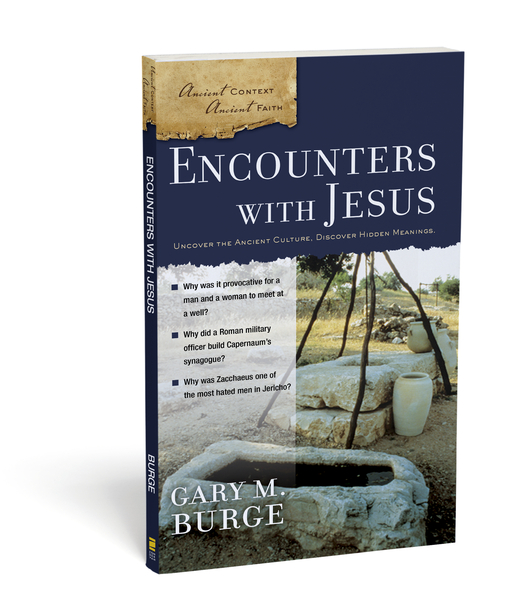
Book Review : Encounters with Jesus (Ancient Context, Ancient Faith) : Gary Burge

A prevalent term for conversion in the contemporary church (at least at the turn of the century) is someone "coming to know Jesus personally." When someone turns from their sin and puts their trust in the Lord Jesus Christ for their righteousness, that person truly does come to know God in a personal way, as one claimed in the New Covenant and the indwelling, personal presence of the Holy Spirit. The Christian is someone who has come to know the God whom we had been at enmity with and come to know Him by His sovereign grace. So "knowing God" describes a change in relationship between the Christian and the Triune God. But a change in relationship sets the table for what follows in coming to know who God is, what He is like, and what He has done. Which is why we are greatly helped in applying ourselves to the great tasks of learning Scripture and learning about Scripture as it reveals to us the work and character of our great God.

Gary Burge's third entry in his series "Ancient Context, Ancient Faith" is entitled Encounters with Jesus and, like the previous two, the title doesn't veer much from accurately summing the book's content. Like the other two volumes, Encounters with Jesus is written in order to provide a better sense of the richness of Scripture by developing the context surrounding different passages or themes. And because reading about the Savior can help us, by grace, come to know Him better, this book can be particularly helpful for those looking for a more devotionally-applicable book supplying context to our understanding of Scripture.

The book is divided up into six chapters, the first of which is essentially an introduction. The first chapter opens by asking "Have you ever wondered what it would be like to encounter Jesus personally?" That question sets the tone well for and provides ample justification for remaining interested in this book that is uniquely devoted to developing the cultural context of five "major" encounters between individuals and the Savior recorded in the Gospel accounts.

The five encounters opened up by Dr. Burge in this volume involve:
  • The woman with a chronic hemorrhage (as recorded in Matt. 9:18-26 & Mark 5:21-43)
  • Zacchaeus the tax collector (as recorded in Luke 19:1-10)
  • The Capernaum centurion (as recorded in Luke 7:1-10)
  • The Samaritan woman at the well (as recorded in John 4:4-26)
  • The Greek woman at Tyre (as recorded in Matt. 15:21-28 & Mark 7:24-30)
Dr. Burge, as a New Testament scholar, provides trustworthy background on these encounters while remaining accessible to Christians with little academic/theological background. The presence of pictures on so many pages gives a good visual sense to the reader, while Burge's language is engaging and keeps the chapters flowing well.

Altogether, this book sits right alongside the other two entries in the series offered by Dr. Burge previously (The Bible and the Land and Jesus, the Middle Eastern Storyteller) in this series. This book does a serviceable job in providing a better and accessible understanding of the cultural relationships that set the background for the grace and mercy of the Lord Jesus poured out in the lives of certain individuals recorded in the Gospels. Hopefully that understanding pushes the reader to draw with greater expectancy to the throne of grace. Thanks to the folks at Zondervan for supplying me with a complimentary copy, without any expectation of a positive review.

Monday, October 1, 2012

Book Review : A Theology of Luke and Acts (Biblical Theology of the New Testament) : Darrell Bock

When associating biblical scholars with their area of specialty, the realm of Lucan studies (at least in my mind) belongs to Darrell Bock.  His two volume commentaries on Luke and one volume on Acts in the Baker Exegetical Commentary on the New Testament series are commonly regarded by conservative evangelical scholars as close to, if not the best available.  Bock's acquaintance with the Lucan material is unquestionably deep and his work on the material will most likely be, taken together, his magnum opus contribution to the field of biblical studies.  For depth of treatment and faithfulness in scholarship to Luke-Acts as the very Word of God, Bock is arguably the number one draft pick to take if treating the inspired physician's New Testament contributions is your priority.

In 2009, Andreas Kostenberger published the inaugural volume of a series plainly called Biblical Theology of the New Testament.  His contribution, which I have not finished reading, addresses a theology of John's Gospel and letters.  I found the portion of the book I've read to be helpful.  When I saw that Bock would be releasing the next volume in the series on Luke-Acts, I was excited and looked forward to reading a biblical theological treatment of Luke's NT contribution.

I began reading Bock's book, A Theology of Luke and Acts: God's Promised Program, Realized for All Nations, with high hopes.  And, altogether, the book doesn't disappoint in providing an encyclopedic treatment of the themes Dr. Bock writes about in his contribution to the BTNT series.  The book is, above all things, informative.  If you have a question about how Luke addresses a particular matter, consulting this volume could be a first stop for you.  That being said, I have to say I found it difficult to make it through the book for the following reasons:

1)  As noted, the book is informative.  It reads more as a reference volume and less as a contribution to a series that seeks to connect biblical theological dots.  This isn't a knock on the book as a matter of content, necessarily.  However, it is to say that it's not as engaging as I expected and doesn't provide as many new angles on biblical theology as I expected.  I'm certainly not looking for bizarre interpretations of texts, but I was hoping to be helped by a Lucan scholar to string things together in a more memorable way.  This, I suggest, is the primary weakness I found with the book.

2)  I was hoping to find Bock addressing some of the more controversial issues that find justification in Acts, particularly, from a solid biblical perspective.  The explosion of the charismatic movement over the past hundred years has given rise to a generation of Christians who have an understanding of Acts that is largely deficient.  It would have been very helpful for Bock to write more (as he does address it somewhat, though, in my opinion, not nearly enough) on the way that Acts functions as a descriptive/prescriptive book in relation to other portions of the Scriptures.  That would have probably been the most needed thing to take away from a book like this and I'm disappointed that it wasn't addressed, seeing as there is both a deep pastoral need and it fits within the parameters of a book devoted to addressing Luke's relationship to biblical theology.  After reading the book, this would be my primary request for something that wasn't handled and could/should have been.

These things being said, Bock does a fine job of presenting the material and staying in bounds with Luke-Acts.  His integrity as a Lucan scholar is clear throughout the book and he doesn't wander into unnecessary territory.  Apart from the above, there's not much one can find fault with in this book and it would do any man well who has a responsibility to preach or teach Luke and Acts to get a copy of this book to support that work.

Altogether, Dr. Bock's contribution to the Biblical Theology of the New Testament series was not as enjoyable as I expected, though it wasn't because the book veers off a cliff anywhere.  It just wasn't as readable.  As a reference volume, the book does a fine job (with the primary exception of my concern regarding the normative nature of Acts, particularly).  I would not recommend it as a book to "read through," but rather as a book to "consult," in order to give a healthier perspective on themes in Luke and Acts.  Thank you to the folks at Zondervan for providing a complimentary copy without expectation of a positive review.

Wednesday, September 26, 2012

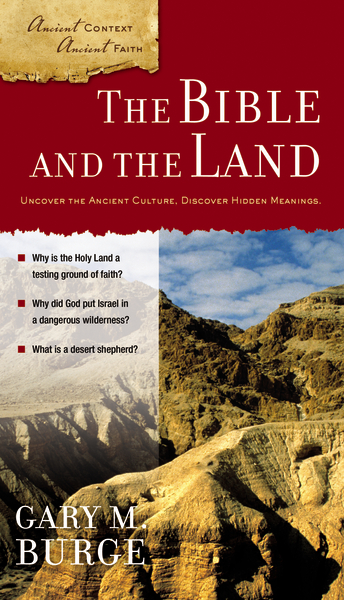
Book Review : The Bible and the Land (Ancient Context, Ancient Faith) : Gary Burge

If you've ever seen an illustration of "How to Prioritize Your Time" that involves big rocks, little rocks, and sand, you'll appreciate what Gary Burge sought to do with the Ancient Context, Ancient Faith series.  And if you're not familiar with that illustration, here's a quick catch-up: the gist of it is that if you have a jar and want to fit in all three components discussed above, there is really only one best way to do it and that's by getting the biggest things in first and working your way down to the fine grain sand that ends up filling in all the gaps.  Once you get the main priorities taken care of, you can keep working down until you get to work on finer details.  The same can be said for how we relate to our knowledge of Scripture: we start out with the big rocks of the gospel itself and the gospel's implications for living as the set apart people of the Triune God and continue having the gaps filled in with broader and deeper knowledge of the things of God.

Dr. Burge has provided, in a series of short and engaging books released over the past few years, some great pebbles to help fill in gaps of understanding that are naturally present for those living outside the time and culture in which the Scriptures were first penned.  This series of books, spanning six volumes, is written by Drs. Burge, Timothy Laniak, and Bradley Nassif with the goal of exploring "themes from the biblical world that are often misunderstood."  Think of the books as literary tour guides that have the benefit of being well-researched and written by men with years of study informing what they're passing along to you.  That's at the heart of this series, Ancient Context, Ancient Faith, published by Zondervan.

The first book released in this series is titled The Bible and the Land.  Don't look for any hidden meanings in the title.  Though you'll be helped to better understand the "lay of the land," you won't find it wrapped up in flashy wrapping paper.  In that sense, the title of the book communicates fairly clearly the content you'll find: how the land informs the imagery of the Scriptures and the experience of the folks you'll find throughout the Bible.  And, frankly, that's right on par with what a series like this should be getting across.  With far too many people making bizarre claims that misinform the genuine believers looking for more helpful Bible background, this book camps out on appropriate themes and treats them solidly.

The book weighs in at just over 100 pages and is populated with pictures on most every page.  This makes the book very readable and particularly readable on a casual (pick-up/put-down) basis.  The chapters address the following themes, beyond the Introduction: "The Land," "Wilderness," "Shepherds," "Rock," "Water," "Bread," and "Names."  As with the title of the book, the chapters aren't intended to grip your attention.  However, the content is very helpful and serves to fill in gaps that may exist between how you read a passage and the richer background informing it.  A good example of that background-informing helpfulness comes in Burge's comparison (with pictures) of a traditional loaf of Israeli bread and the limestone common in Israel.  He helpfully draws out the comparable appearance of the two and then draws our attention to both the wilderness temptation recorded in Matthew 4:3 and the Savior's words on the Father's graciousness toward His prayerful people in Matthew 7:9.

Altogether, the book is helpful, clear, and readable.  The presence of so many pictures helps move the background material away from remaining abstract and puts "a face to a name."  And with the relatively short length of the book, it's hard to be disinterested in finishing it.  The Bible and the Land is a useful volume for filling in the gaps and sets the tone for the rest of the series.  The book (as well as the other volumes in the series) would do well for personal Bible study, homeschooling, or even for use in mentoring/discipleship.  Thanks to the folks at Zondervan for supplying me with a complimentary copy, without the expectation of positive review.


Thursday, September 20, 2012

Book Review : frameworks : Eric Larson

While I was in seminary, we were frequently assigned an Old Testament or New Testament Introduction book as a bird's eye view of the biblical books covered in the course.  My experience with these "Introductions," however, made clear to me that the introductory nature  of those volumes referred more to the relatively short treatment of each biblical book and not the quality or accessibility of the treatment.  Which means that an average OT/NT Introduction book may very well be intimidating for folks who are genuinely seeking a better understanding of Scripture, yet don't have the supporting resources provided in a seminary environment.

This presents a fairly wide gap in the literature available to the vast majority of Christians seeking help in understanding the literary background of the most important Book around.  The Bible is the very Word of God and careful handling of the Word shouldn't be alone practiced by those men called to shepherd the local church in pastoral ministry.  The Scriptures necessitate responsible handling by all, which can be helped by the responsible use of a volume that treats the big picture, background, authorship, and intent of the books comprising the Old and New Testaments.  In writing frameworks, Eric Larson seeks to fill this void with an accessible resource he labels "An Extraordinary Guide for Ordinary People."

Mr. Larson's efforts are, by and large, helpful and function as they are intended.  Nowhere does he intimate that this book is intended to replace Guthrie's New Testament Introduction.  His style of writing is accessible (more on that below) and the book's structure is memorable and helpful.  Though the book's content comes in around 350 pages, it is graphically rich and presents helpful images that capture the theme he intends to communicate.  The scholarship draws water up from disputed wells so as not to confuse readers with unnecessary adventures into academia.  It is, largely, a fairly helpful resource.

There are a couple things that I would encourage future efforts in this vein to avoid.  Larson's writing, intentionally accessible, is, at times, a bit too casual.  Titus is compared to Red Adair and, while I understand his rationale, this example - along with others - displays a bit too much liberty taken in characterizing the people and literature of the New Testament.  It is memorable, but may not be helpful and accurate in its memorability.  Additionally, while I recognize the desire to avoid over-complicating issues of scholarship, there is a lack of complexity to his treatment that may oversimplify some things.  The only issue I found with the content itself was what seemed to be a portrayal of the Law and Old Testament institutions that was only abolished by Christ instead of fulfilled.  It might be me being picky, but I believe it makes a big difference when we look at the Old Testament finding its fulfillment in the Savior, rather than a sense of abandonment for the New.  Otherwise, frameworks would find a decent home in most any evangelical church.

Altogether, Mr. Larson has done a very decent job in providing a resource to Christians seeking to gain a better understanding of Scripture without the intimidating likeness belonging to a number of resources that are otherwise very helpful.  This book, with the slight reservations mentioned above, would do well for any Christian to pick up and gain a more helpful understanding of the New Testament.  Thank you to the publisher for providing a complimentary review copy, which was provided to me free from expectation of a positive review or recommendation.

Thursday, June 28, 2012

Book Review: The Cross and Christian Ministry

I had two endorsements of this book in the back of my mind before even beginning it. The first came from my former lead pastor, whom I remember speaking very highly of The Cross and Christian Ministry. The second is the fact that there has been little, if anything, that Dr. Carson has written and I have not benefited from. So coming to the book, I had expectations that this volume would follow along those lines and be generally helpful and biblically faithful. Without surprise, Dr. Carson's work succeeds at both points.

Let me begin by saying that the Corinthian letters hold, in my opinion, some of the most necessary corrections for the American church today. The nature of the letters as corrective generally lends themselves to addressing "problems" in the life of the church. The problems developing in American evangelicalism increasingly reflect the issues present among the confused Corinthians. Which makes any venture into these letters a profitable one for the pastor/elder or Christian looking to understand what faithful ministry (and Christian living) looks like in an environment hostile to the unique design the gospel supplies to the character of Christian life and ministry. Dr. Carson also wrote a book entitled A Model of Christian Maturity, which takes up some of the issues in 2 Corinthians. Both of these books are very helpful and I would generally recommend both of them as faithful in accomplishing their stated purposes.

The Cross and Christian Ministry takes up various passages in the first Corinthian letter and applies them to the contemporary Christian and Christian leader. Without going into the details of each chapter, it suffices to say that the themes drawn from the letter are more than necessary for any Christian (most certainly the pastor) to have a solid understanding of. The fundamental disparity between the world's values and the gospel's values, between the priorities of fallen men and the priorities of Jesus Christ, are so glaringly evident to us, yet very difficult to leave the former to pursue the latter. And that's where the Corinthian letters, particularly the first, have so much to say to those of us who are tempted to assume worldly priorities and cloak them with Christian garb. Dr. Carson draws out the priorities of a cross-centered life and ministry that necessarily means change on the part of the earnest man of God.

The contents of this book are adapted from addresses delivered by Dr. Carson, which makes them inherently practical. Dr. Carson is particularly gifted in driving home solid theological content in engaging ways. Again, I have usually benefited from anything I have read written by D.A. Carson and this book stands in that line. While the book is shorter than others you might pick up by him, The Cross and Christian Ministry is still well worth the read and should be an assigned as an exit requirement for those graduating from seminary. Seasoned pastors would do well to come back to the priorities Dr. Carson draws out in this book. The Cross and Christian Ministry is a worthwhile book that supplies a much-needed perspective on genuine Christian ministry and living in light of the Cross.

(The folks at Baker Books kindly supplied me with a complimentary copy for review. I was not required to provide a positive review of the book.)

Wednesday, June 27, 2012

Book Review : Lost Letters of Pergamum

The world of Christian fiction isn't typically filled with a host of substantive, biblical, and obedience-provoking titles these days, at least so far as my impression of the landscape goes. If a book isn't about the Amish, it might as well stay off the fiction racks. Sadly, theology and a compelling story rarely seem to have a place together in the Christian publishing world. Reading through Bruce Longenecker's book The Lost Letters of Pergamum, however, proves to be an exception. Here's why:
  • The book, while not strictly "fictional," is historical fiction - which basically means that the license taken to put words in the mouths of characters is a license taken with great attention to the probability that such characters would say what the author has them say. In the case of Longenecker's book, the dialogue mainly consists of a series of fictional letters sent back and forth between Antipas of Pergamum and Luke the Physician (and chronicler of Luke-Acts). What's fascinating about the interchange is that the characters are based on real men, with good biblical scholarship informing the content and style of their correspondence. It's not an historical stab in the dark, but a very real presentation of what an interaction between a first century Christian and pagan may have looked like, particularly those in the higher ranks of society. While the book is clearly fictional, nothing in it reads anachronistically. This needs to be done well for a book written as historical fiction and Longenecker does an excellent job of it.
  • The attention to historical accuracy sets up the characters in a compelling way. Though I knew these letters were fictional, I remained interested to find out what would happen to the characters (some of whom, like the main characters themselves, were very real people in the first century).
  • The evangelistic tone of Luke's letters to Antipas and the church's relationship to Antipas both made a significant impression on me. The way in which Luke respectfully and clearly engaged the pagan Antipas is a model for the kind of evangelism that usually happens in the workplace. Luke persisted in holding the truth before a man whom he initially knew through "professional" channels in a way that is highly instructive for those tempted to neglect speaking Scripture truth in favor of aimless "relationship building." Equally instructive is the way in which the church at Pegamum (at the fictional Antonius' house) openly received Antipas, while displaying genuine Christian living in their interactions. Both serve to convince Antipas of the truth of the gospel. I would not hesitate to suggest that Longenecker intentionally designed these interactions to instruct, which they do well.
  • The first and twenty-first century risk of compromising the gospel is clearly in view, as one church shows a preference for comfort at the expense of their faithfulness to the Lord Jesus. It should not be overlooked that this was a real temptation for the apostolic church facing increasing persecution and lingers today. This, along with Antipas' eventual martyrdom, provide a sobering tone to the book that could otherwise be avoided in a fictional account. Those, along with other sobering moments, provide depth to the book.
 If you're looking to get a better picture of life in the first century church and don't care to read "textbook" type books, The Lost Letters of Pergamum is a sure choice to inform and entertain. It's relatively short at under 200 pages and reads very quickly. I would also recommend the book as a supplement to any Early Church History course, from Sunday School to seminary level. It does a very good job of bringing facts about the first century church together in a way that those familiar with that period of history can generally agree with and those wanting to be familiar can receive a helpful guide.

(The folks at Baker Academic kindly supplied me with a complimentary copy for review. I was not required to provide a positive review of the book.)

Monday, August 22, 2011

Book Review : Readings in the History of Christian Theology, Volumes 1 & 2

If one is looking to access a broad swath of thought and theology over the course of church history, Dr. William Placher's two-volume Readings in the History of Christian Theology may well fit the bill.           
For a two-volume survey of thought over the past two millennia, Placher keeps the work very trim - each volume weighs in at just around 200 pages.  Volume One opens with material contemporary with the very early church, (Gnosticism, etc.) and concludes with content gathered from the late Middle Ages.  Volume Two begins with Reformation writings and concludes with twentieth century theologies of liberation (feminism, race).  While each book touches briefly on significant points of contact with the various authors and thinkers it seeks to represent, Placher does a fairly reasonable job of representing each movement/author with representative excepts.  Further, Placher provides some context to introduce the authors presented, in case the reader is not familiar with the author or vein of thought.
Dr. Placher's personal theological convictions are well-tempered, for the most part, throughout the works.  Some introductions to thinkers seem tilted one way or another; e.g., calling Rudolf Bultmann the "greatest New Testament scholar of his generation."  While these assessments are debatable, Placher's comments are relatively constrained by a desire to simply present the thinker, the bulk of the material being select excerpts.
While some material may be a reach (particularly the concluding bizarre theologies of liberation and culture), the selection is appropriate for an ecumenical survey.  I would certainly disagree greatly with a number of those included by Placher, yet it is important for the serious student of theology and church history to have a rudimentary understanding of those who have figured into the making and marring of theological culture.
If desiring a broad (and again, ecumenical) survey of thought in the history of the church, Dr. Placher's work is certainly worth a glance, both in terms of scope and the relatively low page count it takes up in the process.
I received both volumes from the publisher, Westminister John Knox, as complimentary review copies without expectation of a positive review.